What does Lingo.dev v1 actually do?
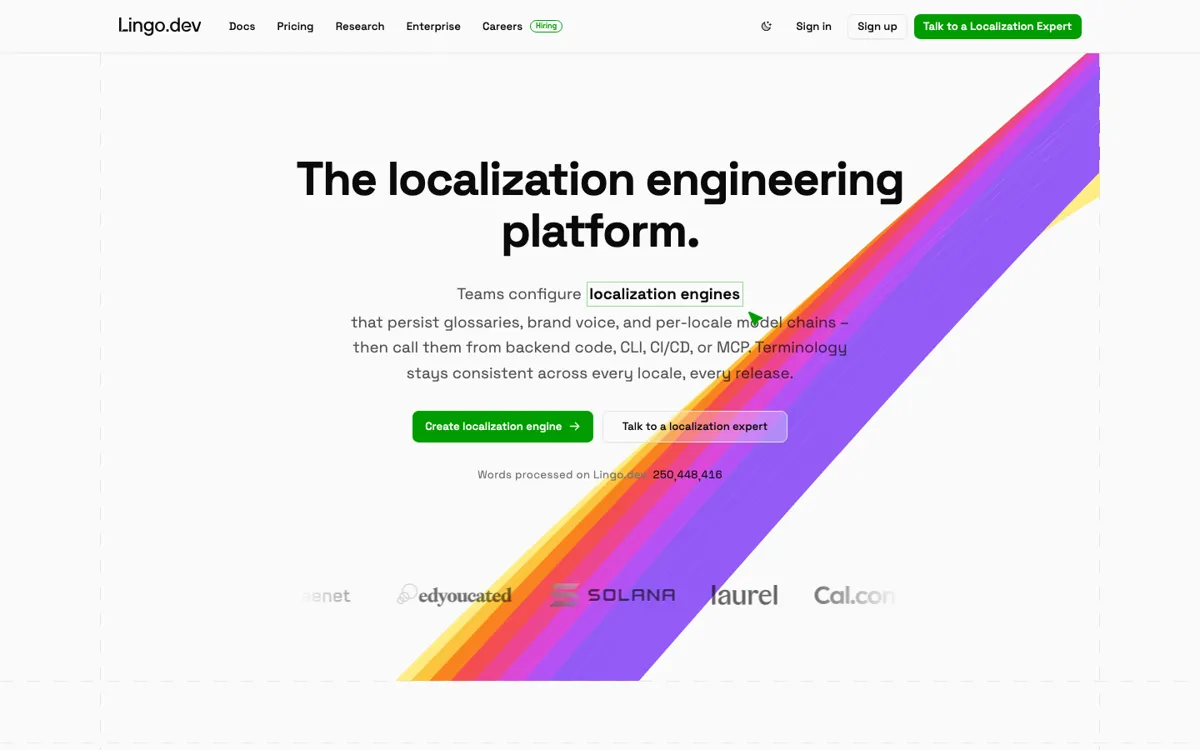
Many AI translation products make sense for ad hoc copy work, but they fall apart once localization becomes part of software delivery. That is where Lingo.dev is trying to stand apart. The site frames the product as a localization engineering platform, which is a stronger claim than simply offering multilingual output. The important distinction is that teams are not just sending text for translation. They are configuring persistent engines with glossary rules, brand voice constraints, per-locale model behavior, and quality checks that are meant to survive across repeated releases.
That control layer is what gives the product a real niche. The homepage and meta description point to code, CLI, CI/CD, and MCP as entry points, which means Lingo.dev wants to live where engineering teams already work. Instead of keeping localization in a separate manual process, it tries to bring translation logic into the same systems that manage builds, tooling, and deployment. For companies shipping to several locales at once, that can matter more than raw translation quality because consistency failures often show up in release chaos, not just in awkward wording.