What does Legalyze actually do?
Medical-record review is one of those legal tasks that looks straightforward until the file gets ugly. A single case can contain hundreds or thousands of pages, spread across scans, PDFs, images, and handwritten notes from different providers. Before anyone can use that material in a demand letter, deposition prep, or damages argument, someone has to sort it into a timeline, spot the key events, and keep track of where each fact came from. That usually means hours of scrolling, copying dates into spreadsheets, and reopening the same source file every time an attorney asks where a detail was found. Legalyze is aimed squarely at that bottleneck rather than at generic legal chat or broad office automation.
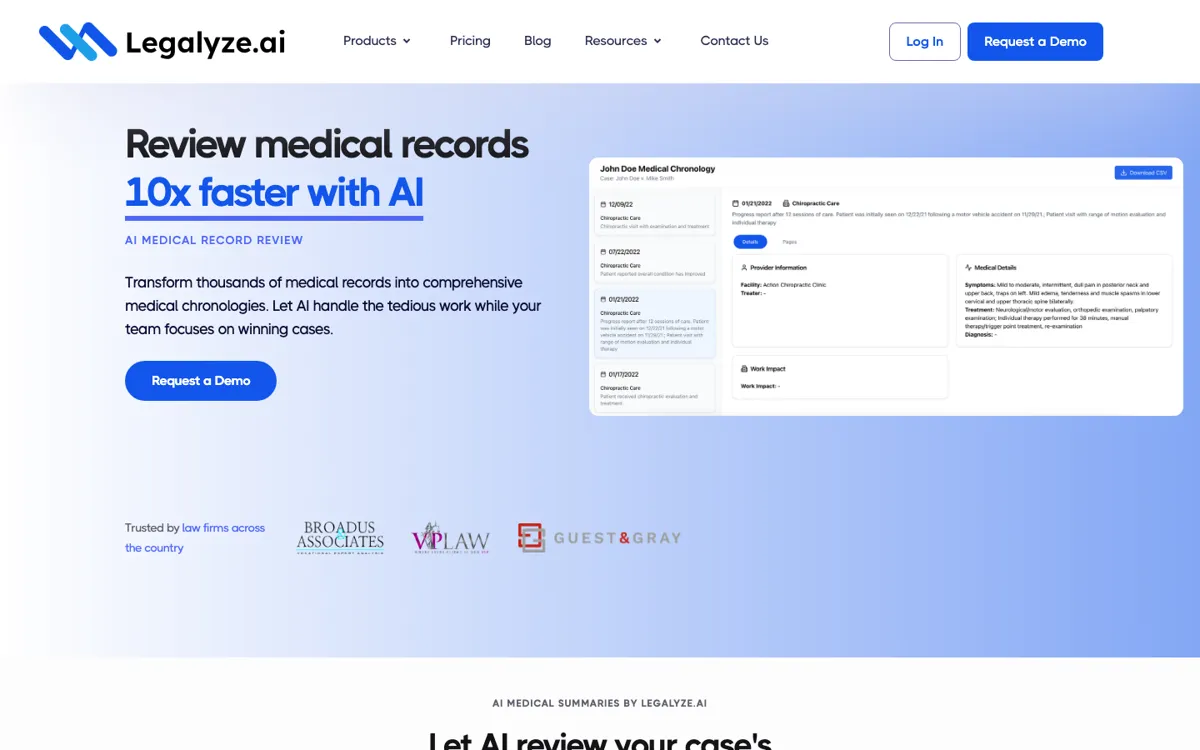
The product’s solution is to turn the record pile into a structured chronology and then keep the source trail attached. On the homepage and FAQ, Legalyze emphasizes that it can create medical chronologies from thousands of pages, process around 10 pages per minute, read scanned and handwritten records through OCR, and let users chat with case files for specific answers. The integration list adds another practical angle: firms using systems like CASEpeer, MyCase, Smokeball, Litify, or Salesforce can reduce manual importing and keep case materials closer to their existing workflow. That combination is what makes the tool more than a simple summarizer. It is trying to shorten both the review step and the retrieval step after review.