AutoGPT Platform Review

6.9/10

Build, deploy, and run AI agents with block-based workflows and hosted infrastructure.

Review updated May 2026 By The AI Way Editorial Tested 99+ tools across the site 5 min read
AutoGPT API Available Web-Based Workflow Builder

Our Verdict

AutoGPT Platform is for people who want to build and run agent workflows, not just talk to a model in a browser tab. Its value comes from turning multi-step agent logic into something you can assemble, host, and reuse on one platform. But if your work does not actually need autonomy, tool chaining, or repeatable execution, the platform will feel heavier and less immediately legible than simpler AI tools, especially with public pricing still unclear from the official pages I could verify.

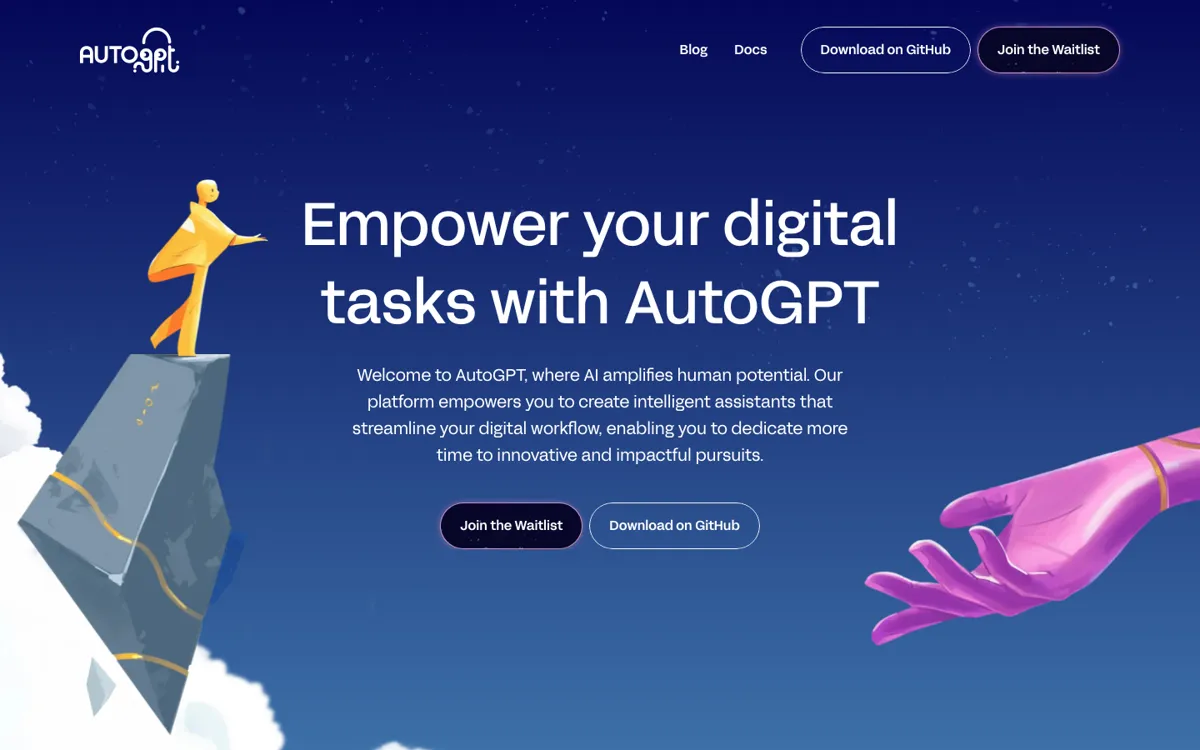
Official Website Snapshot Visit Site ↗

check_circle Pros

  • It is built around agent construction and execution rather than stopping at single-prompt chat.
  • A hosted platform with documentation and workflow structure is easier to operationalize than juggling local scripts and ad hoc experiments.
  • The block-based approach lowers the amount of custom code needed to test multi-step automations.

cancel Cons

  • The official pages I fetched do not surface a clear public pricing path, which makes the buying decision harder than the capability pitch.
  • Agent platforms ask for more setup thinking than simple chat tools, because the value depends on defining a workflow that is worth automating.
  • If you only need one-step prompting or lightweight assistance, the platform shape is likely more than you need.

Should you use it?

Best for: Best for assembling and running repeatable AI agent workflows when you need tools, steps, and autonomous execution to work together instead of relying on one-off prompts.

Skip it if: Skip this if your main job is simple prompting, drafting, or occasional assistant use, because a full agent platform only makes sense when the workflow itself needs to persist and act.

Is it worth the price?

The biggest friction right now is not the product concept but pricing visibility. Until the official pages make the buying path clearer, the platform is easier to evaluate as an agent-building environment than as a clean purchasing decision.

One thing to know before you start

Start with one narrow workflow that has a clear finish line. Agent platforms reveal their value faster when the task is bounded, observable, and easy to judge after a run.

What people actually use it for

Prototype an internal agent workflow without wiring local scripts together

A builder or operator can use AutoGPT Platform to sketch an agent that follows several steps in sequence instead of manually stitching prompts and scripts together in separate tools. You define the workflow, connect the blocks, and observe how the agent behaves in a hosted environment. That is useful when the team wants to validate whether an automation is worth pursuing, but it only pays off if the workflow is concrete enough to measure after a run.

Turn repeated research or action chains into a reusable agent

If a team keeps running the same fetch, summarize, decide, and act loop by hand, this platform can help package that loop into something repeatable. The advantage is not just speed, but consistency, because the workflow can be rebuilt and adjusted on-platform instead of disappearing inside a one-time prompt. The limitation is that weak process design still produces weak agent behavior, even if the interface is easier to assemble.

Host and iterate on agent behavior in one place

For teams experimenting with autonomous systems, the hosted platform can be more practical than passing scripts around and trying to reproduce runs across local environments. Documentation, workflow structure, and centralized execution make iteration easier to manage. But the gain only shows up when the team is genuinely iterating on agent logic rather than simply looking for a nicer chat interface.

What does AutoGPT Platform actually do?

A lot of teams talk about AI agents as if they are just larger chat prompts. In practice, the hard part starts when the system has to do more than answer once. It needs to follow steps, use tools, keep state, and complete a job with some kind of structure. That is the problem AutoGPT Platform appears to be tackling. The homepage frames the product around building cutting-edge AI agents and pushing autonomous systems further, not around helping you draft a paragraph faster. The practical pain point is that agent experiments often live in scattered code, prompt threads, and fragile local setups, which makes them hard to repeat, observe, or hand off.

The platform's answer is a hosted environment with a block-based workflow builder and supporting documentation. Instead of treating each run like an isolated prompt, the product suggests a model where you define the sequence of actions, connect pieces of logic, and run agents as repeatable workflows. In plain terms, that gives users a place to assemble agent behavior in a more structured way than ad hoc scripting alone. That is why the product reads more like an agent platform than a normal assistant. The appeal is strongest when a workflow genuinely has several decision or action steps and the team wants to keep improving that chain instead of rebuilding it from scratch every time.

The main boundary is practical fit and commercial clarity. Agent platforms are naturally heavier than standard AI tools because they ask users to think in workflows, execution paths, and operational goals rather than single requests. That is fine when the task is real and repeatable, but wasteful when the need is simple. On top of that, the official pages I could verify did not expose a clear public pricing route, which makes the product harder to evaluate as a buying decision than as a technical concept. If your team already knows the multi-step process it wants to automate, AutoGPT Platform can be a meaningful workspace. If not, the product risks becoming a place to experiment without ever crossing into useful daily execution.

What you can do with it

Build AI agents with a block-based workflow system instead of writing everything from scratch.
Deploy and run hosted agents on a platform built around autonomous task execution.
Connect agent steps, tools, and logic into repeatable multi-step workflows.
Use platform documentation to configure and operate agent behavior beyond a single prompt.
Manage agent-style automations in one environment instead of scattered local scripts.

Technical details

platform
Web app
deployment
Cloud
api_available
Docs reference platform capabilities, but no clear public standalone API offer was confirmed from fetched pages

Top Alternatives to AutoGPT Platform

If AutoGPT Platform is close but still misses the job, try one of these instead.

Key Questions

Is AutoGPT Platform just another AI chat app?
No. The product is positioned around building and running AI agents, which is a different job from asking a model one question in a chat window. The point is structured, repeatable execution rather than one-off prompting.
When does an agent platform make more sense than a normal assistant?
It makes more sense when the task has several steps, uses tools, and needs to be repeated or improved over time. If the work is mostly one request and one answer, a simpler assistant is usually easier.
Can you clearly verify pricing from the public pages?
Not from the official pages I could confirm in this run. I found homepage, docs, and legal materials, but no verified public pricing page or clear pricing block, so the commercial picture is less transparent than the product description.
Who gets the most value from this kind of platform?
Teams or builders who already know the workflow they want to automate get the most from it. The platform becomes much less compelling when the goal is vague or when no one owns the process design behind the agent.