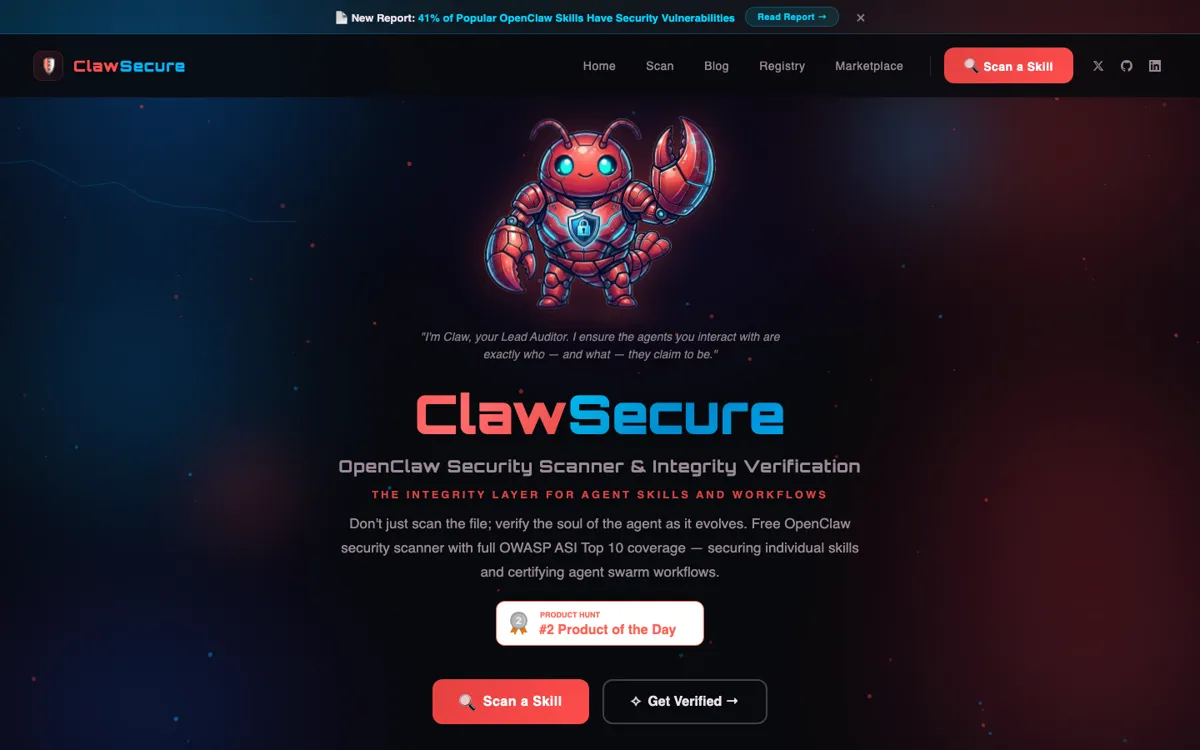
What does ClawSecure actually do?
Agent security is a different problem from ordinary app security because the dangerous part is not only the code you deploy. It is also the skills you load, the tools you authorize, the content you let the agent read, and the workflow jumps it can make after one bad instruction lands in the wrong place. That is why a normal scanner often misses the thing that matters most. It can tell you whether the outer app shell looks safe while completely missing the prompt-injection path inside a skill pack or the risky tool chain buried in a session. ClawSecure is aimed directly at that gap, which makes it easier to understand than a vague AI security platform claim.
The official product surface shows that the company understands the problem as a set of different security boundaries, not one dashboard with one score. There are separate scanners for agents, sessions, skills, reports, and registries, plus an API clearance endpoint for machine-readable checks. That structure matters because agent security breaks in layers. A clean agent can still load an unsafe skill. A safe skill can still be wired into a dangerous session flow. A shared registry can spread risky building blocks faster than a team can review them manually. ClawSecure becomes useful when those layers are already real inside your workflow, not when you are still experimenting with toy prompts.