Adject 2.0 Review

7.8/10

Create hyperrealistic product visuals with AI.

Review updated May 2026 By The AI Way Editorial Tested 144+ tools across the site 5 min read
Adject Commercial Rights Image-to-Image Product Photography Text-to-Image Text-to-Video Web-Based Paid from $29.00/mo

Our Verdict

Adject 2.0 makes the strongest case when you need a steady stream of product images for listings and ads, but do not want every new concept to start from a blank prompt. The value is less about making one pretty render and more about keeping one product reference alive across multiple image and video variations. The tradeoff is that you are still betting on AI consistency for sell-facing assets, which means careful review matters if product fidelity, lighting, or brand rules need to stay tight across a full campaign.

Try it
Paid product. Starts at $29.00 USD.
open_in_new Visit Adject 2.0
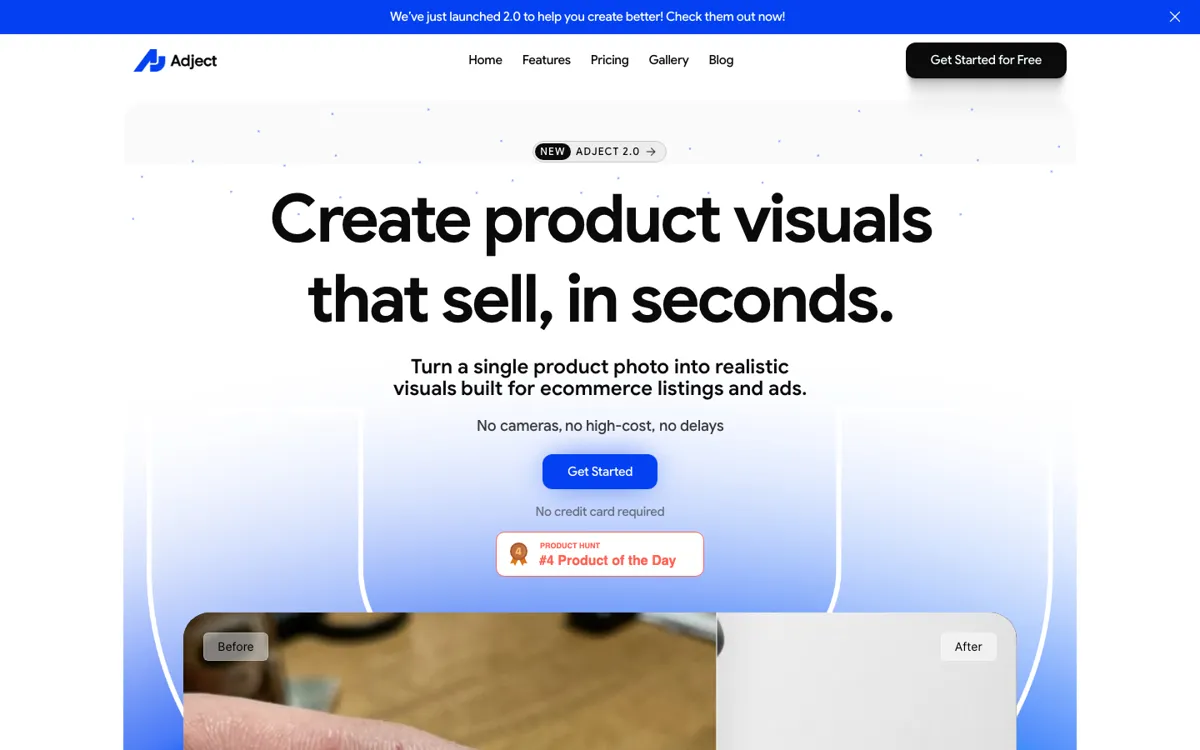
Official Website Snapshot Visit Site ↗

check_circle Pros

  • It is built around reusing one uploaded product reference instead of forcing you back into a generate, download, restart loop.
  • It covers both still images and short product videos, so a small brand can make listing visuals and ad assets in one place.
  • The templates and guided steps lower the barrier for sellers who want usable outputs without learning prompt engineering.

cancel Cons

  • The biggest trust question is product consistency across repeated edits, and that is also what multiple Product Hunt commenters pushed on.
  • Pricing starts at $29 per month, so it is not a casual free playground for people who just want to test a few concepts occasionally.
  • The official site is light on hard technical detail, which makes it harder to judge how well it handles edge cases like reflective materials or strict brand locking before you try it.

Should you use it?

Best for: Turning one existing product photo into a batch of listing images, lifestyle scenes, and simple ad creatives for Shopify, Amazon, Etsy, or POD storefronts.

Skip it if: Skip it if your job depends on pixel-strict product accuracy across many campaign assets and you cannot spend time checking whether the AI drifted on color, texture, or geometry.

Is it worth the price?

Paid Starts at $29.00 USD

The pricing is straightforward, but the real decision is whether you will use it often enough to replace repeat design work or small photoshoots. If you only need occasional visuals, the monthly cost can feel heavier than the headline suggests.

The Free Tier

Homepage says Start Free and Get Started for Free, but the pricing page only shows paid tiers and does not spell out the free tier limits.

Paid Upgrade
$29/month

Basic plan includes 120 credits, 4K quality, no watermark, image generation, video generation, limited templates, and commercial use.

One thing to know before you start

Start with one product line that already has clean reference photography. The clearer your source image is, the easier it is to judge whether Adject is saving time or quietly introducing product drift.

What people actually use it for

Refresh stale ecommerce listings without booking a new shoot

If you already have one clean product photo but need new listing images for Shopify, Amazon, or Etsy, Adject is built to turn that single reference into fresh studio or lifestyle variants. That is useful when the bottleneck is not product design, but the repeated cost of shooting every new angle, seasonal variant, or ad concept from scratch.

What does Adject 2.0 actually do?

Adject 2.0 is aimed at a very specific bottleneck: ecommerce teams that need product images all the time, but do not want every new campaign to trigger a mini production cycle. The official site keeps repeating the same pain in practical terms, no cameras, no models, no delays, no back-and-forth. That positioning matters because it separates Adject from broad AI art tools. It is not trying to be a blank canvas for any kind of image generation. It is trying to be a faster replacement for the repetitive part of commercial product visuals, especially when a seller needs listing images, promotional shots, and lightweight ad creative from the same source product.

What stands out is the continuity model. The Product Hunt launch post and homepage both stress that products, edits, videos, and assets stay connected inside one workspace instead of getting flattened into disconnected outputs after each run. That is a more valuable promise than the generic claim of making good-looking renders. For a merchant or content team, the expensive part is often not the first image. It is keeping six or ten images consistent enough to feel like one campaign. The public comments also reveal the main pressure point here: people immediately asked about consistency, geometry drift, reflective materials, and style locking. That tells you the market sees the use case as real, but also knows exactly where these tools usually fail.

The pricing page makes the commercial positioning clear. This is not a free toy built for casual experimentation. Paid plans start at $29 per month, with credits, 4K output, no watermark, commercial use, and video generation included from the first tier. That is sensible for sellers who regularly need new product visuals, but less compelling if you only make creative once in a while. The bigger decision is not whether the entry price is high, it is whether the output is reliable enough to replace mockups, patchy DIY shoots, or outsourced visual work. If Adject can hold product fidelity under repeated edits, it has real upside. If not, the continuity advantage weakens fast because every saved step gets paid back in manual checking.

What you can do with it

Turn one uploaded product photo into studio shots, lifestyle scenes, and ad-ready ecommerce visuals.
Generate short product videos from product images inside the same project space.
Use structured templates and guided steps instead of relying on open-ended prompt writing.

Technical details

deployment
Cloud SaaS
open_source
No public open-source repo linked from the official site pages reviewed.
commercial_use
Yes, paid plans explicitly include commercial use.
template_system
Yes, structured templates are part of the product and higher tiers unlock full templates.
video_generation
Yes, the pricing page includes video generation and frame-to-video generation.

Top Alternatives to Adject 2.0

If Adject 2.0 is close but still misses the job, try one of these instead.

Key Questions

What is Adject actually built for?
It is built for ecommerce product visuals, not general AI art. The product is positioned around listing images, ad creatives, and short product videos that sellers can use commercially.
Do you need prompt-writing skills to use Adject?
No, at least not according to the official FAQ. Adject says it uses structured templates and guided steps so people can get consistent outputs without learning prompt engineering.
Can Adject replace a normal product photoshoot?
It can replace many lifestyle and marketing visuals, but not every edge case. The FAQ says some brands still use traditional shoots for specific needs, which is a useful reminder that AI output still has boundaries.
What is the main thing to verify before using Adject at scale?
Check product fidelity across multiple iterations. Public discussion around the launch focused heavily on whether the tool can keep lighting, textures, geometry, and brand details stable from shot to shot.