What does Superlog actually do?
Observability tools often fail in a boring way: they collect plenty of data, but the team still does the expensive part by hand. Someone has to wire instrumentation, decide which metrics matter, group repeated failures, chase root cause across services, and finally turn the incident into an actual code change. Superlog is trying to attack that whole chain instead of just improving the dashboard layer. That matters most for small and mid-sized engineering teams where observability debt piles up because nobody wants to spend weeks hand-instrumenting services before they have confidence that the setup will pay off. If your current process is alert, scramble, grep, patch, and postmortem later, this is targeting a real bottleneck rather than inventing a fake one.
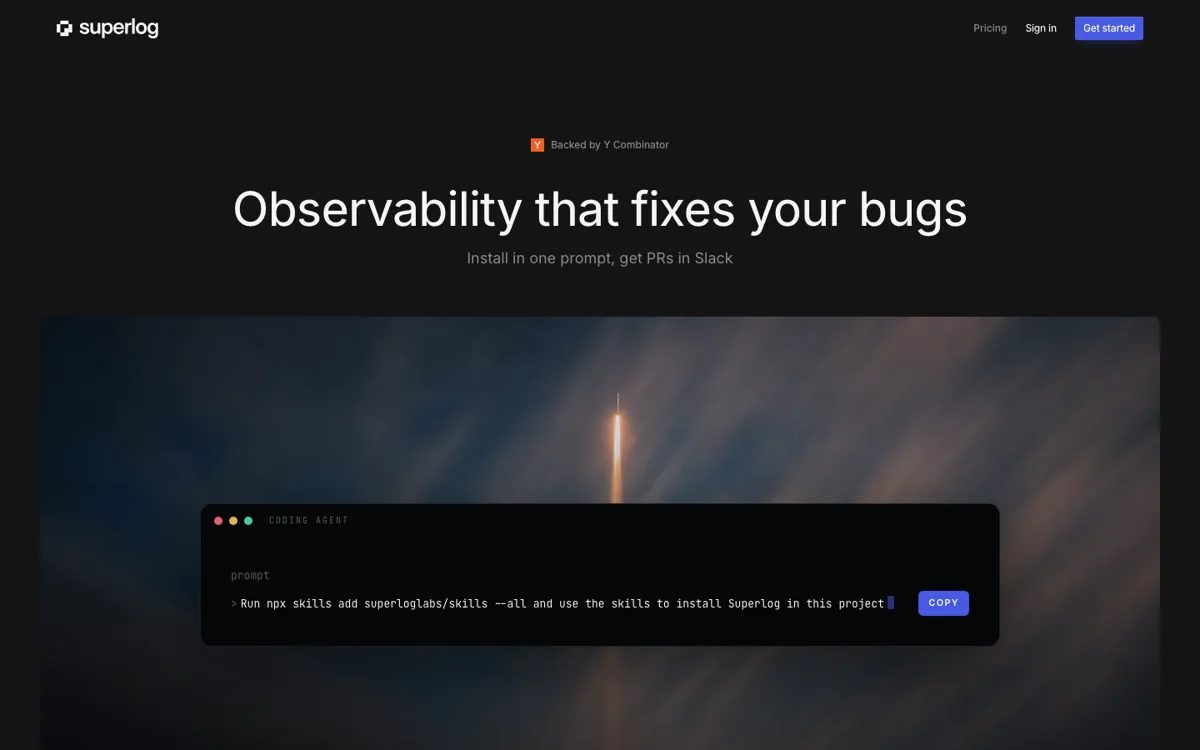
The strongest part of the pitch is how tightly the workflow is packaged. Superlog says it can install OpenTelemetry instrumentation in one prompt, keep scanning the codebase and infrastructure for drift, collapse similar failures into incidents, then investigate those incidents and prepare a PR when the evidence passes its confidence bar. On top of that, paid plans expose telemetry and incidents through MCP, which makes the system usable by agents instead of forcing everyone back into a web UI. That is a meaningful differentiator from tools that stop at correlation or root-cause hints. It also helps that the pricing page is already explicit about investigation credits, telemetry volumes, retention windows, and plan ceilings, because early-stage infrastructure tools often hide that until a sales call.