What does Copy.ai actually do?
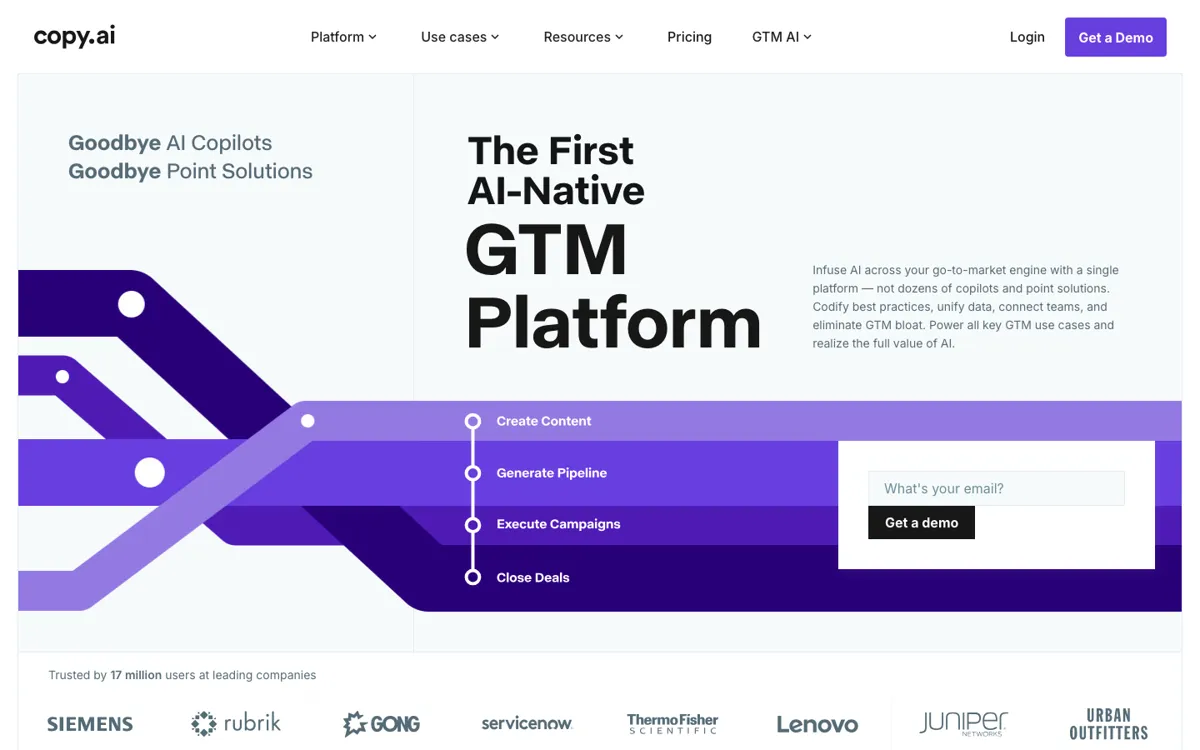
Copy.ai no longer reads like a tool for fixing blank-page anxiety. It is trying to own the messy middle of GTM work: lead intake, enrichment, routing, rewrites, and the handoffs between marketing, sales, and RevOps. That makes it easier to justify for teams with repeatable operational drag, and harder to justify for anyone who only needs better copy on demand.
The useful unit here is not a prompt but a repeatable path. Inbound lead processing is the clearest clue: Copy.ai wants structured, frequent work that is annoying to keep doing by hand. If the team already knows the steps from intake to action, it can reduce resets and keep execution more consistent.