Chatbase Review

8.4/10

AI customer support agents for businesses that need answers, actions, and human handoff in one stack.

Review updated May 2026 By The AI Way Editorial Tested 262+ tools across the site 5 min read
Chatbase AI Agents API Available B2B Customer Support Multi-language No Credit Card Required SaaS Security Slack Team Collaboration Voice Agent Web-Based Workflow Builder Freemium from $32.00/mo

Our Verdict

Chatbase is a fit when you need one platform to run support automation, system actions, human escalation, and reporting without stitching together a chatbot, integration layer, and help desk glue yourself. It gets expensive once you move past testing, but the value is real if your support team needs the bot to actually resolve account, order, and subscription tasks instead of just answering simple questions.

Try it
Free to start, then pay when the limits stop you. Starts at $32.00 USD.
open_in_new Try Chatbase
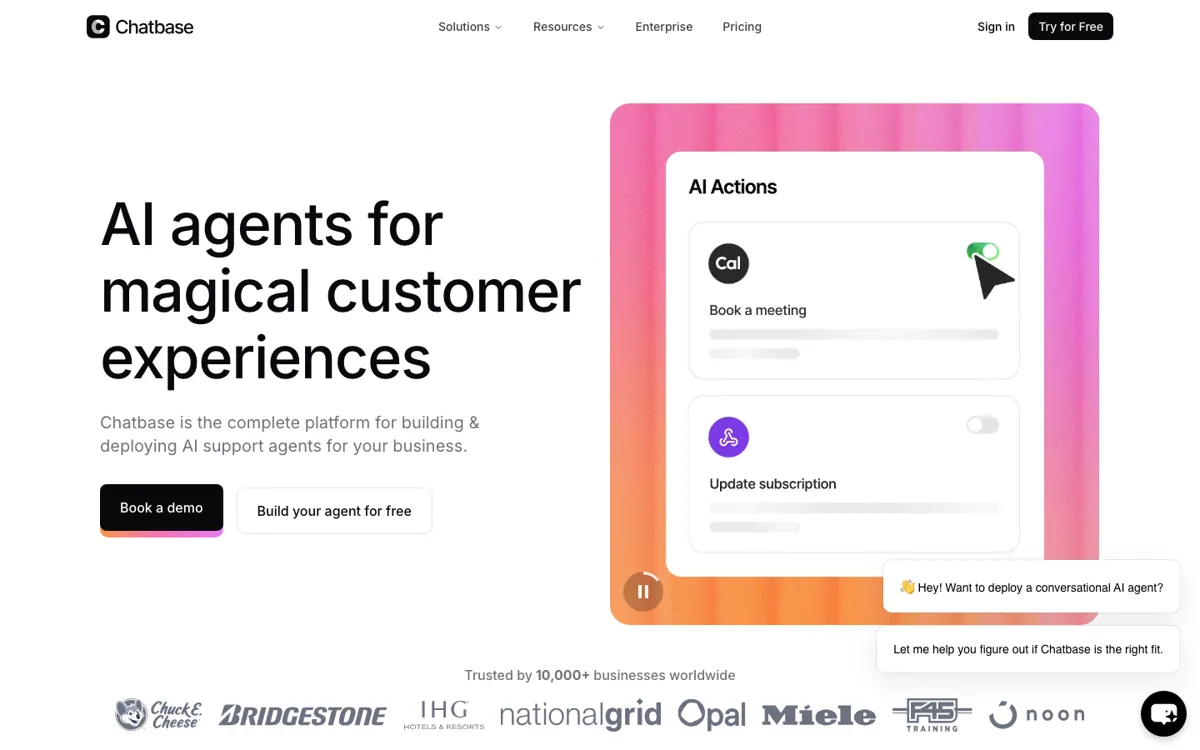
Official Website Snapshot Visit Site ↗

check_circle Pros

  • It is built around support workflows, so actions, escalation, analytics, and channel coverage are first-class instead of bolted on later.
  • The platform makes live data access part of the product, which matters if your bot needs order status, subscriptions, CRM records, or ticket context to answer correctly.
  • Model comparison is useful for teams that do not want to lock their support stack to a single provider before they understand accuracy and cost tradeoffs.
  • Security posture is stronger than many lightweight chatbot tools, with SOC 2 Type II, GDPR claims, rate limiting, role controls, and domain allowlists on the public security pages.

cancel Cons

  • The free tier is too limited for real production evaluation, with only 50 message credits, 400 KB per agent, one seat, and automatic deletion after 14 inactive days.
  • Important capabilities move up the pricing ladder fast. API access, voice, telephony, personalization, and advanced integrations do not show up until Standard or above.
  • This is overkill if you only need a simple FAQ bot on a landing page and do not need actions, routing, or operational analytics.
  • The public GitHub footprint is thin right now, so developer trust still leans more on docs and the hosted product than on a broad open tooling ecosystem.

Should you use it?

Best for: Support and operations teams that want an AI agent to answer account questions, pull live customer context, trigger backend actions, and hand hard cases to humans without building the whole stack from scratch.

Skip it if: Skip it if your real job is just dropping a cheap brochure-site chatbot on one page, because the paid plans make more sense only when you need workflows, integrations, API access, or voice support.

Is it worth the price?

Freemium Starts at $32.00 USD

The headline starts low enough to test buyer intent, but Chatbase is not cheap once you need production behavior. Standard is the first plan that looks like a real support stack because that is where API access, voice, telephony, personalization, and stronger integrations start to appear.

The Free Tier

Free plan includes 50 message credits per month, one member, 400 KB per AI agent, limited model access, and agents are deleted after 14 days of inactivity.

Paid Upgrade
$32/month billed annually for Hobby

Paid plans unlock higher message credits, more AI Actions, larger training limits, more seats, integrations, analytics, API access, voice, telephony, personalization, and enterprise controls.

One thing to know before you start

Use the free plan to validate tone, source quality, and escalation logic, but do not judge the whole product from it. The real decision point is whether Standard unlocks enough API, action, and channel coverage to replace the support glue you would otherwise build yourself.

What people actually use it for

Automate tier-one support without stopping at canned answers

Use Chatbase when your support queue is full of order checks, account questions, subscription changes, and policy lookups that need live context, not just static help-center text. Its value shows up when the bot can read current system data, act on it, and only escalate the messy edge cases.

What does Chatbase actually do?

Chatbase is strongest in the gap between a basic FAQ chatbot and a full custom support automation build. A lot of tools can answer questions from documents, but support work usually breaks the moment the user asks about their own order, subscription, account state, or a change that needs an action. Chatbase tries to solve that layer directly by combining knowledge sources, live integrations, actions, and escalation rules inside the same product. That matters if your support team is tired of bots that sound competent for one turn and then immediately hit a wall when the customer needs something done.

The pricing page makes the product ladder pretty clear. Free is enough to test the surface area, but not enough to model real support volume or sustained deployment. The useful production line starts once you need higher message limits, more actions, API access, voice, telephony, personalization, or advanced integrations like Stripe and Zendesk. That means Chatbase is easier to justify for companies replacing real support labor or support tooling complexity, and harder to justify for someone who just wants a cheap site widget with a little AI attached.

The platform also looks more mature than many chatbot builders on operational controls. Public pages call out domain allowlists, rate limiting, user roles, SOC 2 Type II, GDPR compliance, encryption, and guardrails for misinformation and off-topic replies. That does not remove the normal diligence you should do on any hosted AI vendor, but it does signal that Chatbase is selling into teams that care about abuse prevention, access control, and customer trust, not only fast demos. If you are evaluating vendors for support automation, that security and workflow depth is a bigger differentiator than raw chatbot novelty.

What you can do with it

Train support agents on business data and deploy them across web chat, WhatsApp, Slack, and email.
Connect live systems such as CRMs, help desks, subscriptions, and order tools so the agent can pull current customer context.
Let agents take actions like updating subscriptions or changing account details instead of stopping at answer-only support.
Compare multiple AI models and configurations to tune the support workflow for accuracy and cost.
Route edge cases to human support through live chat or help desk escalation rules.
Track analytics, agent activity, and optimization signals after deployment.

Technical details

platform
Web app with embeddable agents, REST API, developer docs, and public Swift SDK for iOS 17+ and macOS 14+ integrations.
deployment
Hosted SaaS with omnichannel deployment across website chat, WhatsApp, Slack, email, Messenger, Instagram, and telephony, plus domain allowlists, rate limiting, user roles, and SOC 2 Type II / GDPR claims.
api_available
Yes. API access starts at the Standard plan, and docs expose chat, agent management, conversations, leads, assets, contacts, webhooks, custom domains, and streaming support.

Top Alternatives to Chatbase

If Chatbase is close but still misses the job, try one of these instead.

Key Questions

Is Chatbase just a website chatbot builder?
No. The product is aimed higher than a simple FAQ widget. It is trying to cover support knowledge, live data access, backend actions, escalation, analytics, and multi-channel deployment in one stack. If you only need a lightweight site bot, the platform is probably more than you need.
What plan actually matters for a real production rollout?
Standard is the first plan that looks production-ready for many teams because that is where API access, voice, telephony, personalization, and advanced integrations show up. Hobby is closer to a limited working setup than a full support automation stack.
Can Chatbase work in a developer-managed product, not just as a no-code tool?
Yes. The docs expose REST API flows, streaming, webhooks, custom domains, and agent management endpoints, and the public Swift SDK shows they are investing in product-side integrations. It is still a hosted SaaS, but it is not locked to no-code-only usage.