What does Hermes actually do?
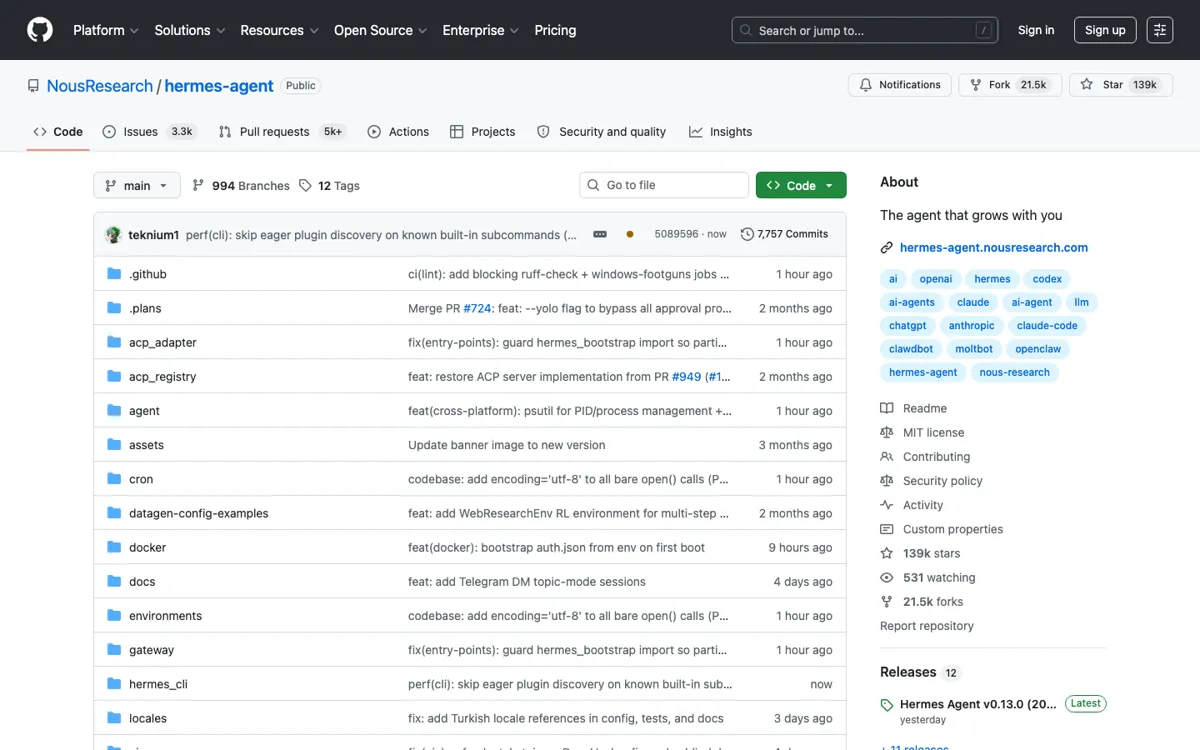
Most mainstream AI assistants are optimized to feel good the first time you open them. Hermes is aimed at a different question: what if the assistant becomes more useful because it remembers, accumulates skills, and adapts to the way you work over time? That shift matters because it changes the product from a one-off interaction surface into a system with continuity. The GitHub framing, “the agent that grows with you,” is not just branding. It points to the central idea that the assistant should become more aligned with your workflow instead of resetting to generic behavior every time you start fresh.
That design puts Hermes in the same broad category as OpenClaw and similar assistant-infrastructure systems, but with a particularly strong emphasis on memory, skills, and long-lived growth. The appeal is obvious for technically inclined users: open source control, system extensibility, and the possibility of an agent that becomes more personally useful instead of more generic. Public discussion and review signals reinforce this split. People who care about ownership and extensibility find the concept compelling, while people who mainly want a smooth instant-use assistant see the repo-first shape as friction rather than freedom.