What does Qypt AI actually do?
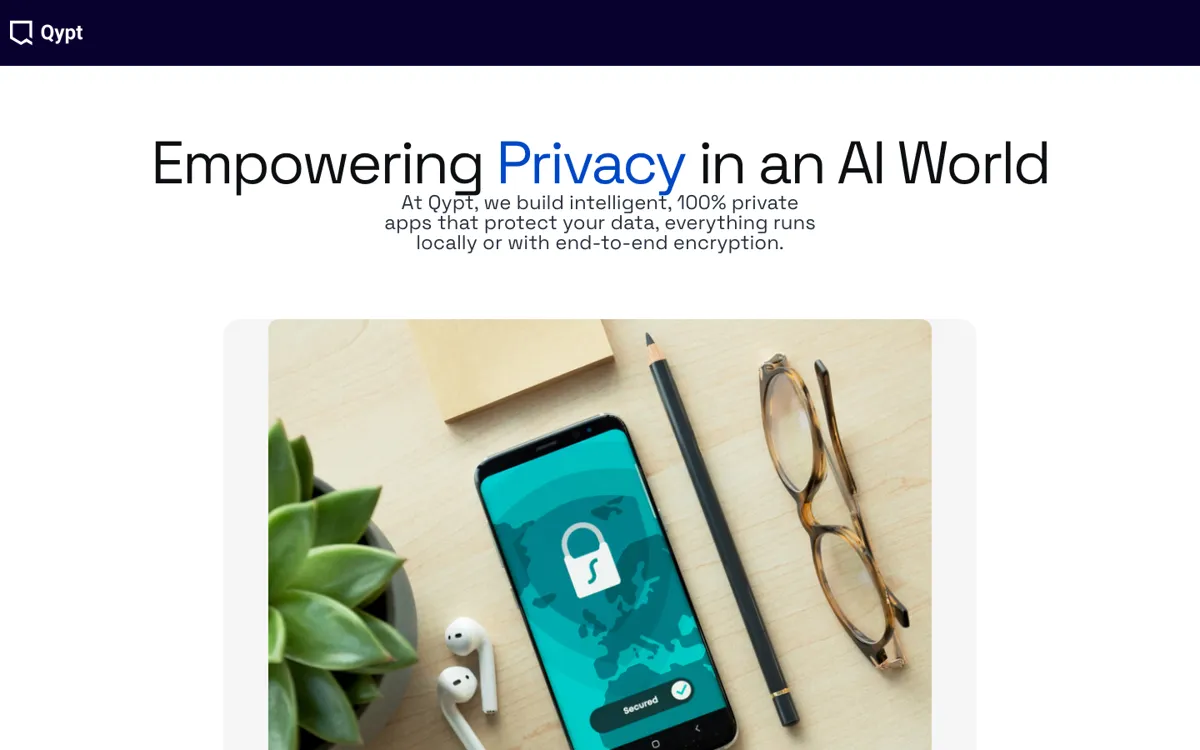
A lot of teams are not blocked from AI by lack of ideas. They are blocked by one boring, practical question: where can we safely use it? Public tools are convenient, but the moment the work touches internal documents, customer context, or sensitive collaboration, that convenience starts colliding with policy and trust. Qypt AI is built around that exact hesitation. The official homepage does not hide privacy deep in a footer or a compliance page. It makes privacy the opening argument, which immediately changes how the product should be judged.
That positioning gives Qypt a clearer business role than many general AI workspaces. Instead of competing as just another chat box, it tries to become the approved place where internal AI use can happen without defaulting to public-model habits that make security teams nervous. The product looks best in environments where collaboration, document work, and knowledge analysis are already happening, but AI adoption is stuck because nobody wants to be the person who pasted the wrong file into the wrong tool. In that setting, a privacy-first collaboration layer can unlock work that broad consumer tools never touch.