What does Murf actually do?
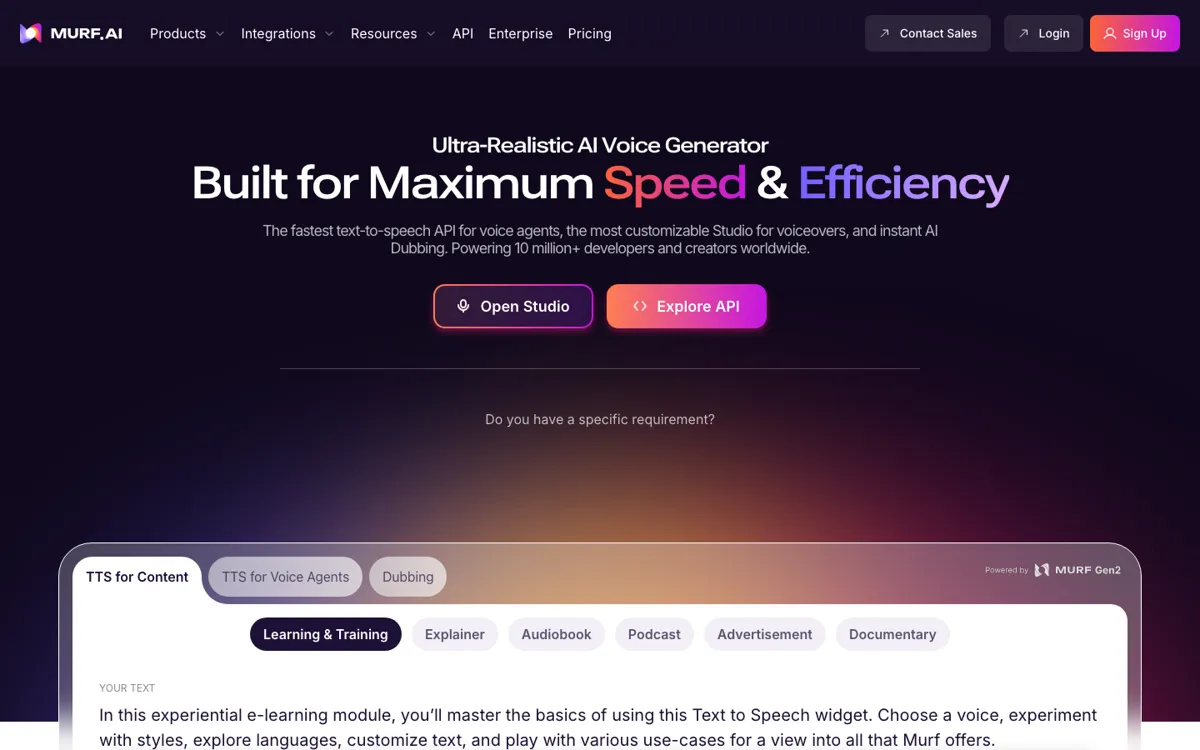
Many AI voice tools are easy to demo and hard to justify long term. They make one good voice sample, but the moment you need multilingual versions, dubbing, API access, or conversational behavior, the stack starts to fragment. Murf is trying to solve that sprawl problem. The product presents itself as a broader voice platform, not just a voiceover generator, which matters because it changes the buying question from 'does this voice sound good?' to 'can this replace several separate voice tools in my workflow?' For teams that actually touch multiple voice jobs, that is a more important question than a single polished demo line.
The strongest evidence for Murf is not one flashy feature but the way the site groups adjacent capabilities together. Text to speech, AI dubbing, conversational AI, APIs, and a wide language catalog all point to a platform meant for recurring use across content and product teams. That can be valuable when the same company needs marketing narration, global adaptation, and embedded voice features without re-vetting a new vendor every time. It also makes Murf easier to defend for operations-minded buyers, because the pitch is closer to workflow consolidation than to isolated voice generation.