Midjourney Review

8.0/10

Generate stylized images through Midjourney's web and Discord-based creative workflow.

Review updated May 2026 By The AI Way Editorial Tested 99+ tools across the site 5 min read
Midjourney Image-to-Image Text-to-Image Web-Based Paid from $10.00/mo

Our Verdict

Midjourney is what people open when they care more about visual character than about getting the fastest generic image draft. Its biggest strength is the recognizable look it can produce and the huge prompt culture around it, which helps people push ideas further than a bare prompt box usually does. But the official site is still weaker than it should be on plain onboarding and pricing clarity, so beginners often have to learn the product by orbiting its docs and community instead of getting a clean product walkthrough upfront.

Try it
Paid product. Starts at $10.00 USD.
open_in_new Visit Midjourney
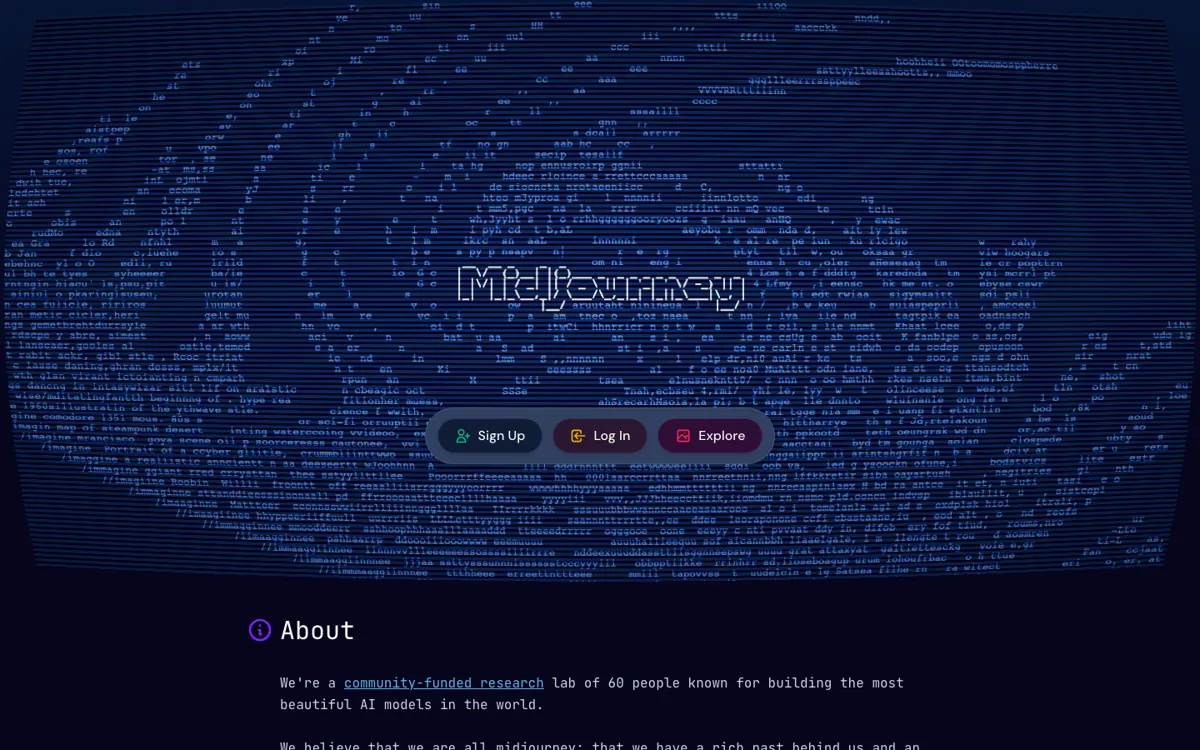
Official Website Snapshot Visit Site ↗

check_circle Pros

  • It has a strong visual identity, so people reach for it when they want images with mood and style instead of flatter utility output.
  • The surrounding community gives users a real prompt-learning environment, not just an empty box and a generate button.
  • The official docs and support structure are easy to find from the homepage, which helps once you decide to learn the workflow.

cancel Cons

  • The homepage spends more energy on brand and lab framing than on clearly explaining how a new user actually starts making images day to day.
  • The product still expects users to learn a lot through docs and community habits instead of spelling out the everyday workflow clearly on the homepage.
  • The product still carries a community-and-docs learning curve, so it is a weaker fit for people who want a fully self-explanatory browser canvas on first click.

Should you use it?

Best for: Generating concept art, moodboards, character studies, or stylized visual directions when the look of the output matters as much as the subject itself.

Skip it if: Skip it if you need a dead-simple image tool with obvious pricing and a fully explained first-session workflow, because Midjourney still expects you to learn through docs, community habits, and experimentation.

Is it worth the price?

Paid Starts at $10.00 USD

The Basic plan is enough if you want to test whether Midjourney's look is actually different enough to justify learning its prompt culture. The cost jumps matter once image generation becomes part of regular commercial work, and privacy-sensitive teams should note that Stealth Mode only appears on the higher Pro and Mega tiers.

Paid Upgrade
$10/month for the Basic Plan

Higher tiers add unlimited Relax Mode, and Pro or Mega unlock Stealth Mode for private generations.

One thing to know before you start

Do not judge Midjourney from one prompt. The tool makes more sense when you iterate on composition, style, and references instead of treating it like a single-shot image search box.

What people actually use it for

Build a visual direction before any final design work starts

Midjourney fits early-stage concept work where you need to explore atmosphere, color, costume, composition, or visual tone before the rest of the project is locked in. Instead of asking a designer to hand-sketch five different moods from scratch, you can use prompts to pressure-test directions quickly. The value is highest when the team is still deciding what the world should feel like, not when every asset already has tight brand constraints and exact production specs.

Generate stylized references for characters, scenes, or campaign imagery

If your job is to walk into a meeting with strong-looking reference frames rather than production-perfect final assets, Midjourney is easier to justify. You type in a scene or character idea, iterate on style and framing, and pull out several directions worth discussing. It helps most when taste and inspiration are the bottleneck, but less when you need rigid editing controls or predictable brand-safe output every single time.

Learn prompt craft inside an active visual community

Some image tools are better treated as private utilities. Midjourney is stronger when you are willing to learn by watching how other people prompt, iterate, and refine. That makes it useful for artists, marketers, or creative leads who want to sharpen visual prompting instincts, but it is less appealing for people who want a quiet, fully self-explanatory workspace with no community learning overhead.

What does Midjourney actually do?

The hard part of AI image generation is often not getting any image at all, but getting one that feels like it came from a real visual point of view. Many tools can turn a text prompt into something usable, yet the results often feel flat, stock-like, or interchangeable unless you spend time layering style instructions and rerolling endlessly. Midjourney became popular because it pushed hard in the opposite direction. Even the official homepage reflects that positioning: it talks less like a software utility page and more like a creative lab introducing a distinct visual world. That is a clue that people are not only paying for output volume here. They are paying for a certain kind of image taste and for a workflow that rewards experimentation.

What Midjourney offers, based on the official site and documentation entry points, is a creative system built around image generation, discovery, and community-guided learning. The homepage routes people to Explore, Documentation, and Discord instead of overexplaining every feature in place. That setup can actually help once you are inside the product, because it creates an environment where prompting is something you study and refine rather than a one-click commodity. For people building campaign concepts, fantasy scenes, moodboards, or character directions, that can lead to more distinctive results than a plain text-to-image box that gives you four serviceable drafts and little else.

The tradeoff is that Midjourney still asks for more tolerance than a cleaner mainstream SaaS product. The official homepage is sparse on operational detail, even though the official billing article does spell out a four-tier paid structure with Basic, Standard, Pro, and Mega plans, and reserves unlimited Relax Mode and Stealth-related privacy features for higher tiers. That means the product is easier to price once you reach the right docs page, but still not as self-explanatory as a tool that puts plans, controls, and workflow on the landing page itself. Midjourney is strongest when you are willing to trade some product plainness for a more distinctive visual engine and a heavier culture of experimentation.

What you can do with it

Turn text prompts into stylized AI-generated images.
Browse public creations and references through the Explore surface.
Use official documentation and Discord support to learn commands and workflows.
Iterate on image ideas inside Midjourney's community-driven creation environment.

Technical details

platform
Web app with Discord-based community workflow
deployment
Cloud-hosted
api_available
No public official API found

Top Alternatives to Midjourney

If Midjourney is close but still misses the job, try one of these instead.

Key Questions

Is Midjourney more about image quality or ease of use?
It leans more toward image character and style than instant simplicity. You can get strong results, but the product expects more experimentation and learning than a plain beginner-first image app.
Do you need to use community resources to understand Midjourney?
Often yes. The official site points users toward documentation and Discord, which suggests the learning path is partly product and partly community habit.
How much does Midjourney start at?
It starts at $10 per month on the Basic Plan according to Midjourney's official plan comparison article. Higher plans increase monthly cost and add features such as Relax Mode or private-generation options.
What kind of creative work is Midjourney best opened for?
It is best opened for concept-heavy visual work such as moodboards, character directions, scene exploration, and stylized campaign ideas where the look of the image is part of the decision, not just the subject matter.