CodeGraph Review

8.0/10

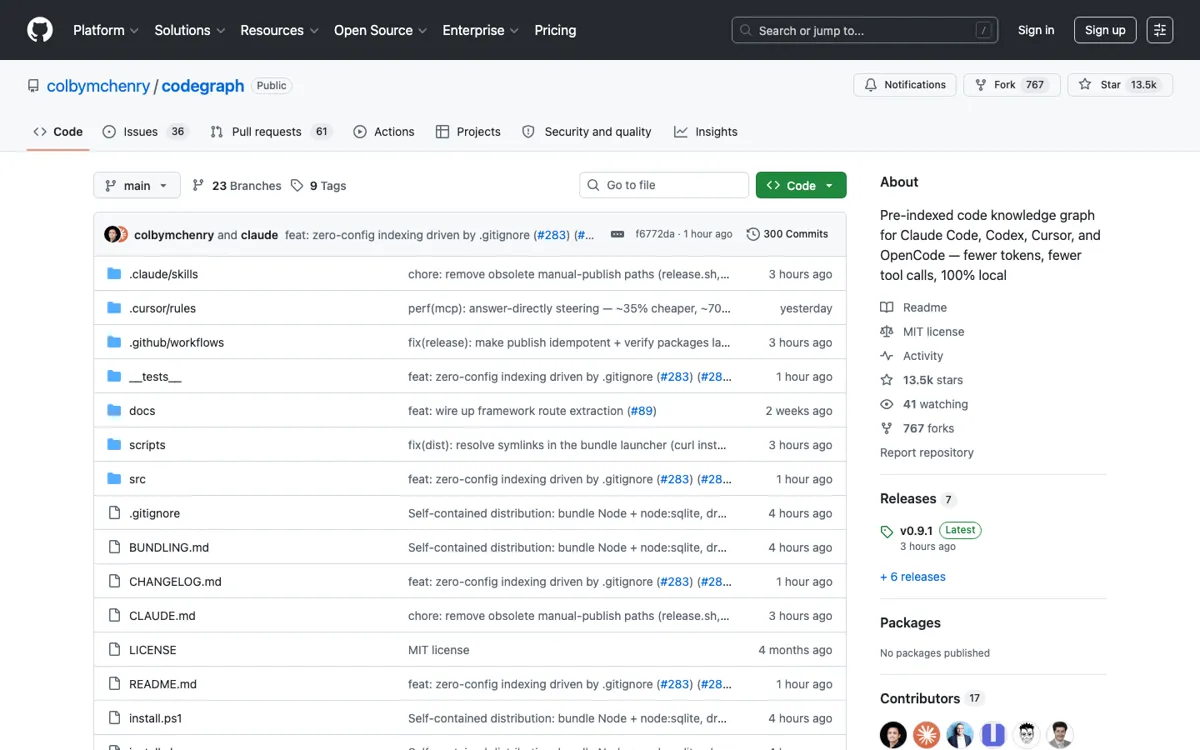
Local code knowledge graph for Claude Code, Codex, Cursor, and OpenCode with fewer tokens and fewer tool calls.

Review updated May 2026 By The AI Way Editorial Tested 262+ tools across the site 4 min read
CodeGraph CLI Tool Open Source Repo Awareness Free

Our Verdict

CodeGraph is interesting because it solves a real assistant-era repo problem, context waste. Instead of asking a coding model to rediscover the same project structure again and again, it gives the assistant a local graph-shaped memory of the codebase. The catch is that this is still tooling for people already deep in Claude Code, Codex, Cursor, or OpenCode workflows, not a broad end-user AI product.

Try it
Free to start.
open_in_new Try CodeGraph
Official Website Snapshot Visit Site ↗

check_circle Pros

  • The value proposition is unusually concrete for an AI dev tool: fewer tokens, fewer tool calls, and better repo understanding are easy to picture and easy to test.
  • Its assistant support story is broad enough to matter, because it is not trying to trap users inside one coding-agent ecosystem.
  • The issue discussions show real user pressure around assistant coverage and workflow friction, which is more useful than launch applause because it points to actual adoption behavior.

cancel Cons

  • This is still a fairly technical local tool, so the setup and workflow burden are part of the product whether the README sounds simple or not.
  • If your code assistant usage is light, the promised token and tool-call savings may not be large enough to justify another layer in the stack.
  • The product boundary is narrow on purpose, which helps clarity but limits how far it can stretch beyond code-understanding and assistant-grounding use cases.

Should you use it?

Best for: Developers and technical teams who are already using Claude Code, Codex, Cursor, or OpenCode heavily enough to care about repo context quality, token waste, and repeated structural lookup overhead.

Skip it if: Skip CodeGraph if your main need is code generation speed on small projects or if you are not hitting repo-comprehension friction yet. It matters most when assistant context is becoming the bottleneck.

Is it worth the price?

Free

Because CodeGraph is open-source and local-first, the first cost is not subscription, it is setup and workflow fit. The tool pays off when the repo is large enough and assistant usage is heavy enough that context savings clearly beat the friction of adding another local layer. If that pain is still minor, even a free tool can feel like extra setup with little return.

The Free Tier

The project is presented as an open-source GitHub-distributed tool with no official paid plan surfaced in this review round.

One thing to know before you start

Test CodeGraph on a repo that already feels expensive for your assistant to reason about. If the assistant starts reaching the right files with less context rebuilding, the product is doing real work. If your repo is small and clean, you may not feel the win clearly enough to judge it fairly.

What people actually use it for

Reduce repeated repo context work in coding assistants

A strong fit when Claude Code, Codex, Cursor, or OpenCode keep burning time and tokens rediscovering the same project structure. CodeGraph helps when the cost of re-understanding the repo is starting to show up in every serious session.

Ground assistants on large local repositories

Useful when the repository is large enough that normal assistant context windows stop being reliable. The local knowledge graph matters most when understanding the codebase has become a recurring overhead problem.

Keep code understanding local instead of shipping repo context outward

Good for developers who care about local-first workflows and want structural repo help without turning the solution into another hosted cloud dependency.

What does CodeGraph actually do?

CodeGraph is built around a very specific pain in AI-assisted coding: assistants are often too expensive in context even when they are good at code. On large repositories, a model may spend too many tokens re-finding files, re-inferring structure, or making extra tool calls just to reconstruct the same map of the project. That slows down useful work and makes code understanding feel noisier than it should. CodeGraph tries to solve that by pre-indexing the repository into a reusable local graph, so the assistant starts from a richer structural picture instead of rebuilding it every time.

That makes the product strongest for developers already deep into assistant-heavy workflows. The value is not “AI coding” in the generic sense. The value is more operational: less repeated lookup work, better repo grounding, and more reliable movement across files when the assistant needs to answer or act. The README positioning is strong here because it ties the tool directly to Claude Code, Codex, Cursor, and OpenCode instead of pretending to be a universal platform for everyone. The issue discussions reinforce that this is being judged on real workflow compatibility, which is the right pressure for a tool like this.

The limitation is product shape. CodeGraph is still local developer infrastructure, not a broad user-facing AI product. That means setup, compatibility, and workflow discipline matter more than with a simple hosted SaaS. It also means the win is easiest to feel on larger or more tangled repositories. If a project is small, or if an engineer is not yet feeling real context drag from their assistant, the extra layer can seem unnecessary. So the honest read is this: sharp use case, sharp audience, strong SEO potential, but still a tool for people who already know exactly why repo context is hurting them.

What you can do with it

Pre-index a repository into a local code knowledge graph for AI coding assistants.
Reduce repeated token usage and tool calls when assistants need repo context.
Work with Claude Code, Codex, Cursor, and OpenCode instead of one single assistant path.
Keep the indexing and graph workflow fully local rather than pushing repo context to a hosted service.
Improve codebase understanding before asking assistants to search, edit, or explain project logic.

Technical details

platform
Local developer tool distributed through GitHub for repository indexing and assistant context work.
deployment
Open-source local-first TypeScript project under the MIT license.
api_available
No public product API was confirmed; the project is used as a local tool and code integration layer.

Top Alternatives to CodeGraph

If CodeGraph is close but still misses the job, try one of these instead.

Key Questions

What does CodeGraph actually improve?
It improves how coding assistants understand repository structure. The goal is to reduce repeated context rebuilding, token waste, and unnecessary tool calls when an assistant needs to reason about a larger codebase.
Who is CodeGraph really for?
It is for developers already using tools like Claude Code, Codex, Cursor, or OpenCode enough to notice that repo understanding is becoming a recurring drag. If that pain is not real yet, the tool will feel early.
Is CodeGraph a hosted product?
Not from the public surface reviewed here. The project is presented through its GitHub repository as an open-source, local-first tool rather than a conventional hosted SaaS product.