What does CloakBrowser actually do?
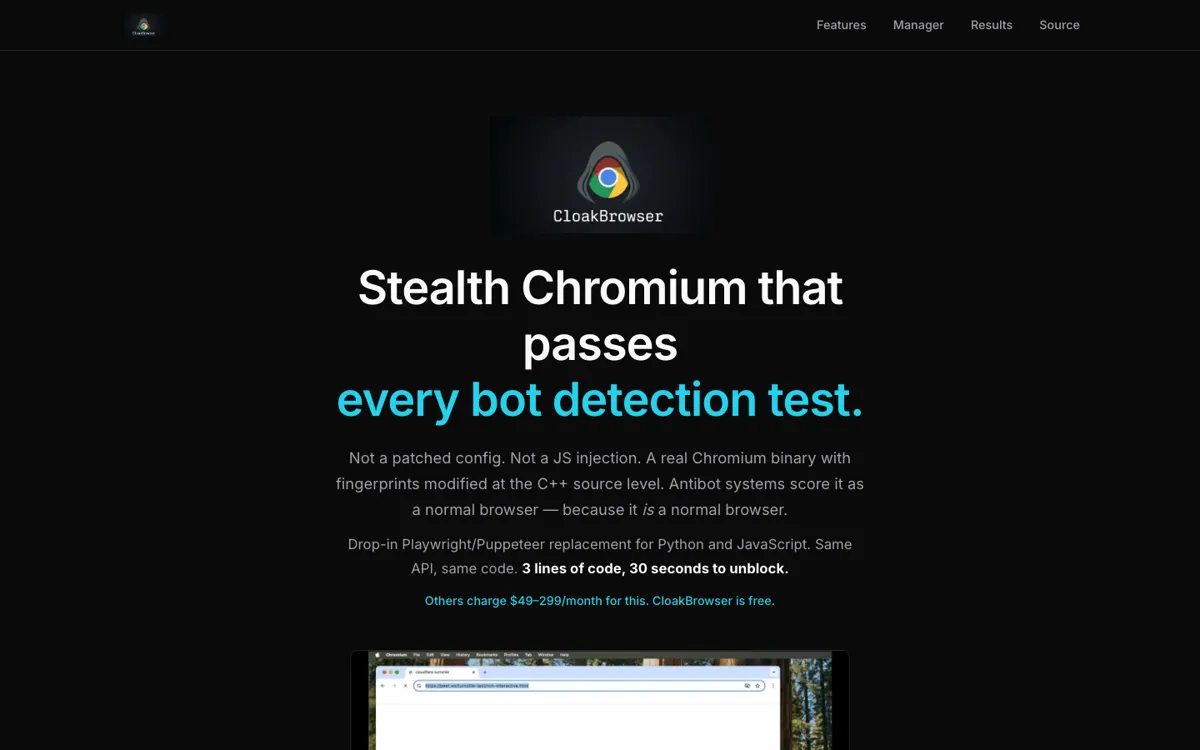
CloakBrowser stands out because it solves a problem that browser automation teams can describe in one sentence: the script is fine, but the browser gets caught. The homepage and repo are unusually direct about this. Rather than promising vague automation magic, the project calls itself stealth Chromium for browser automation, describes itself as a Playwright replacement, and highlights source-level fingerprint patches. That framing matters because technical buyers do not need more abstraction when the real bottleneck is detection. They need a browser layer that behaves less like obvious automation under scrutiny. The “30/30 tests passed” claim may invite skepticism, but it is the right kind of skepticism, because it gives teams a concrete statement they can validate instead of a fuzzy promise they cannot measure.
The strongest use case is not generic scraping for hobby projects. It is production browsing in environments where anti-bot checks keep breaking agent or automation reliability. Browser agents, stealth QA flows, and hostile-site automation all fit that pattern. In those cases, swapping the browser substrate can matter more than upgrading the orchestration layer on top. That is why CloakBrowser belongs in coding-related classification even though it is not a standard AI product. The overlap with web-agent workflows is real. Teams building agents that must browse, click, wait, and extract information from the modern web often discover that browser stealth is one of the hardest parts of the stack to patch after the fact.