Inworld AI Review

8.1/10

Real-time AI voice API for game characters — 58 built-in voices, low-latency streaming, designed for NPC and character dialogue.

Review updated May 2026 By The AI Way Editorial Tested 99+ tools across the site 5 min read
Inworld AI Game Development NPC Real-Time Text-to-Speech Voice AI Freemium

Our Verdict

The real reason to open Inworld AI: you need characters that remember what happened in previous conversations without you re-explaining context every time. It handles multi-hour NPC sessions with working memory — the part most character APIs fail at. But the pricing is per-seat and the free tier is genuinely minimal, and if you just need a simple Q&A bot you are paying for capability you will not use.

Try it
Free to start, then pay when the limits stop you.
open_in_new Try Inworld AI
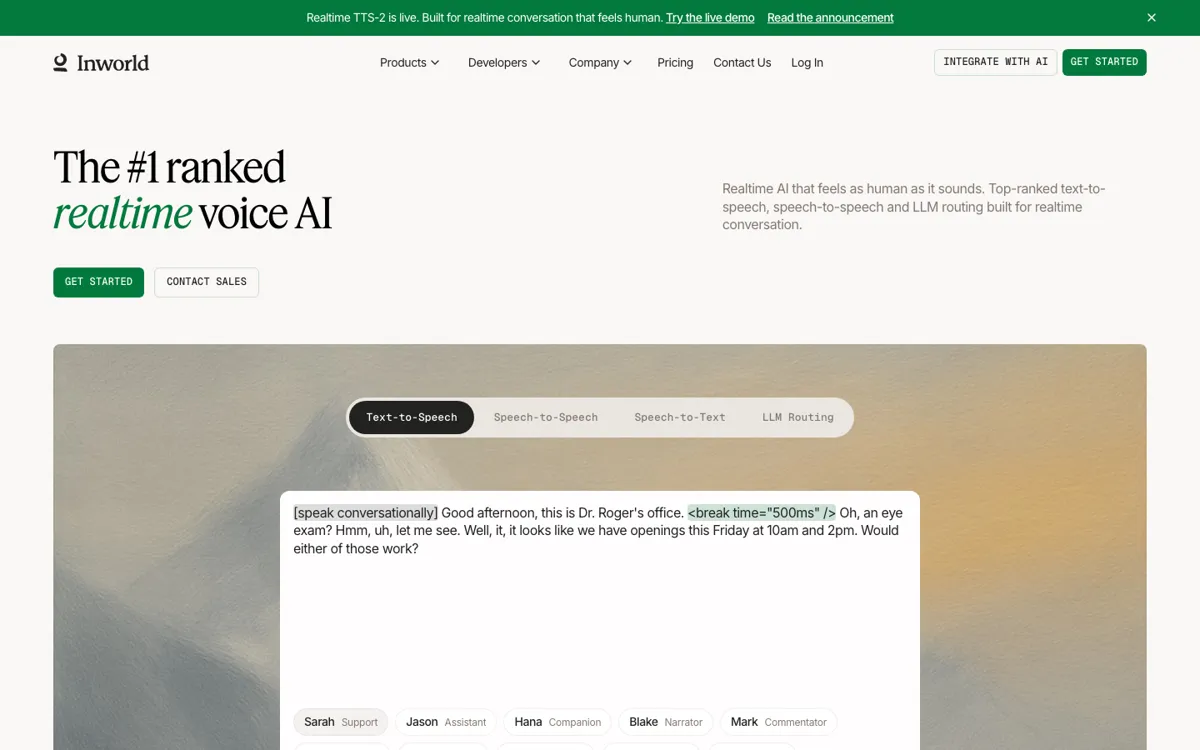
Official Website Snapshot Visit Site ↗

check_circle Pros

  • Real-time low-latency voice generation designed for interactive NPCs — not just pre-recorded TTS
  • 58 built-in character voices cover a wide range without requiring custom voice training
  • Microsoft Xbox partnership gives it enterprise and platform credibility
  • LLM integration means NPC dialogue can be generated dynamically rather than scripted

cancel Cons

  • Pricing is usage-based and scales with character count and session length — costs can be unpredictable for large games
  • PH launch comments suggest some confusion about exact latency numbers — founding team had to clarify
  • Game studios need engineering resources to integrate the API — not a plug-and-play solution for non-technical teams
  • Free tier (100K chars/month) runs out fast for any serious prototyping

Should you use it?

Best for: for creating persistent NPC characters that maintain context across long conversations in games, virtual worlds, or interactive experiences — specifically when you need characters that remember what happened in previous sessions rather than starting each conversation fresh

Skip it if: you need pre-recorded voiceovers for linear content (trailers, cutscenes), or your team doesn't have API integration experience

Is it worth the price?

Freemium

The free tier gives you 100 API credits per month — that is enough to run roughly 5-10 short conversations with an NPC. Once you are testing multi-hour sessions or multiple concurrent characters, you will burn through those credits in under an hour. Studio at /month gets you 10K credits, which is the realistic minimum for a project with more than one active NPC. Enterprise at /month is for teams that need 100K credits and dedicated support. The pricing is per-seat, which means each developer or designer who logs in is a separate paid seat.

The Free Tier

100,000 characters/month on Starter plan

Paid Upgrade
Contact for pricing

10000 API credits per month

What people actually use it for

Build NPCs with dynamic, real-time dialogue

Connect Inworld's voice API to your LLM and give NPC characters the ability to generate and speak responses in real-time during gameplay, with emotional tone controlled by text prompts.

Prototyping character voice for a new game

Use the 58 built-in voices to quickly find the right character voice for your NPCs without custom voice training, then swap in a custom voice once the prototype is locked.

Add voice to AI companions in interactive media

Teleport real-time streaming is designed for AI companions and interactive characters that need to respond to player input with natural, low-latency speech.

What does Inworld AI actually do?

Game studios creating NPCs with AI-driven dialogue have historically faced a trade-off: pre-recorded TTS sounds natural but cannot respond dynamically to player input, and scripted dialogue is limited by what the writers anticipated. The alternative — building custom TTS infrastructure from scratch — is expensive and time-consuming. Most independent studios lack the resources to build real-time voice generation for interactive characters, and off-the-shelf TTS tools are not designed for the sub-100ms latency that interactive dialogue requires. The result is that most AI-powered game characters either sound robotic or require enormous engineering investment.

Inworld's Realtime TTS API is built specifically for the latency constraints of interactive game characters. It connects to your LLM and generates voice output in sub-100ms, so the character speaks while the language model is still processing — the latency is imperceptible in gameplay. Voice 2.0 gives you 58 pre-built character voices across a range of ages, accents, and emotional registers, or you can design a custom voice identity from scratch. You control tone and emotional energy via text prompts mid-scene. Teleport is the real-time streaming layer that handles the live voice session between your game and Inworld's servers.

Usage-based pricing means costs scale with the number of characters, sessions, and voice minutes consumed — for a large game with hundreds of NPCs, this can add up significantly and requires careful cost modeling before committing. Integration requires API work — it is not a Unity plugin you drop in, and game studios need at least one developer comfortable with HTTP APIs and async integration patterns. The free tier (100K characters/month) is generous for prototyping but exhausted quickly by any serious use. And because Inworld is US-based, there may be latency implications for players in regions far from US servers — something the founding team acknowledged in PH comments when asked about exact latency numbers.

What you can do with it

Real-time voice generation API with sub-100ms latency for NPC dialogue
58 built-in character voices across accents, ages, and styles (Voice 2.0)
Custom voice creation: design a unique voice identity for your characters
LLM integration: connect your language model to generate dynamic dialogue
Teleport: real-time voice streaming for live interactive characters
Emotion and voice control via text prompts — adjust tone, pacing, and energy mid-scene

Technical details

latency
Sub-100ms real-time streaming
voice_count
58 built-in voices at launch
integrations
Game engines (Unity, Unreal), LLM providers
api_available
True
platform_access
API

Top Alternatives to Inworld AI

If Inworld AI is close but still misses the job, try one of these instead.

Key Questions

What is the free tier and what do you get?
Starter plan: 100,000 characters per month for free. After that, usage is billed pay-as-you-go. Starter includes Teleport sessions, all 58 Voice 2.0 voices, and custom voice creation.
How low is the latency for real-time voice?
Inworld's Teleport feature targets sub-100ms end-to-end latency for interactive use cases. The founding team clarified on PH that this is for Teleport (real-time streaming sessions), not batch API calls. Actual latency depends on network conditions and how the integration handles streaming.
Do I need to be a game developer to use this?
You need API integration experience. Inworld provides SDKs and examples for Unity and Unreal Engine, but the core product is an HTTP API, so any developer comfortable with async API calls can integrate it. Non-technical teams will need developer support.
What about ElevenLabs or OpenAI TTS — how does Inworld compare?
ElevenLabs and OpenAI TTS are primarily designed for pre-recorded, batch-oriented content (dubbing, voiceovers, audiobooks). Inworld is built for real-time interactive use cases — NPCs, AI companions, live characters — where sub-100ms latency matters. The API design and pricing model reflect this real-time streaming architecture.