HasData Review

8.1/10

Scrape websites and SERPs through APIs, no-code scrapers, and managed proxy infrastructure.

Review updated May 2026 By The AI Way Editorial Tested 204+ tools across the site 4 min read
HasData API Available B2B Lead Enrichment Production Workflows Web-Based Freemium

Our Verdict

HasData is attractive when your real job is using web data, not fighting the plumbing needed to collect it. It gives teams one stack for scraper APIs, proxies, browser automation-style extraction, and no-code scraping, which is especially useful when AI agents or enrichment workflows need stable external data. The tradeoff is that this is still data infrastructure. If you only need occasional scraping or a narrow one-off export, the platform can be more stack than you need.

Try it
Free to start, then pay when the limits stop you.
open_in_new Try HasData
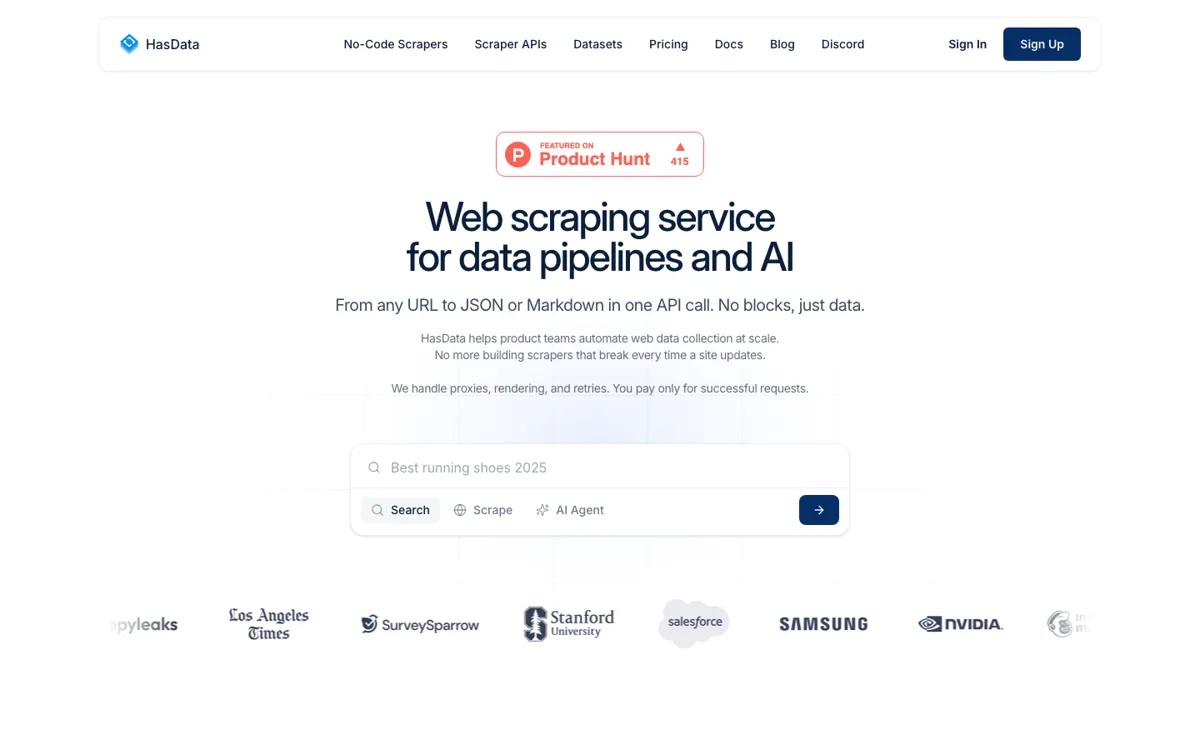
Official Website Snapshot Visit Site ↗

check_circle Pros

  • The product covers the ugly operational layer that usually fragments scraping setups, so you do not have to stitch together proxy vendors, browser tooling, and API wrappers yourself.
  • It is broad enough to serve both technical and non-technical teams, because scraper APIs and no-code scrapers can live in the same account instead of forcing one workflow style.
  • The AI-agent angle is believable because agent workflows break fast without dependable live data, and HasData is selling exactly that dependency layer rather than pretending to be the agent itself.

cancel Cons

  • This is still infrastructure, so the value is easy to overestimate if you do not already have repeatable workflows that depend on fresh web data.
  • Broad scraping platforms can become expensive once extraction volume grows, especially when you start leaning on premium proxy pools or high-frequency jobs.
  • The product is easier to justify for teams than solo tinkerers, because the biggest benefits come from operational stability, not from a single clever scrape.

Should you use it?

Best for: Teams building AI agents, enrichment pipelines, market monitoring, or lead workflows that need web data continuously and cannot afford brittle scraping setups.

Skip it if: Skip it if you only need occasional ad hoc scraping or a single narrow data source, because HasData makes more sense once data extraction is an ongoing system, not a one-time task.

Is it worth the price?

Freemium

The free tier lowers the barrier to testing, but the real buying decision is about ongoing volume. HasData looks sensible when failed scraping costs you more than infrastructure spend. It looks oversized when you are still in the stage of running a few manual pulls and calling that a workflow.

The Free Tier

The public pricing section includes a free tier to start testing the platform.

Paid Upgrade
Contact for pricing

Paid plans expand scraping volume, infrastructure access, and operational capacity beyond the starter tier.

One thing to know before you start

Test one workflow that already fails in production, not a clean demo target. If HasData cannot make that messy scrape stable enough to trust in an automated pipeline, the rest of the platform breadth will not matter much.

What people actually use it for

Feed live web data into agent workflows

A team building an agent that needs current listings, search results, or public company signals can use HasData as the extraction layer instead of forcing the agent to handle brittle scraping itself. That setup matters because most agent failures around the open web are data access failures long before reasoning becomes the real bottleneck.

What does HasData actually do?

HasData earns attention because it targets a problem many AI and automation teams underestimate until they are already in pain. Pulling data from the web sounds simple in pitch decks, but in practice it turns into a rotating mess of bans, broken selectors, proxy juggling, inconsistent page rendering, and rising maintenance cost. HasData is trying to absorb that operational mess into one platform through scraper APIs, managed browser-style extraction, no-code scrapers, and proxy infrastructure. For teams that already depend on web data, that kind of consolidation is more valuable than yet another agent wrapper promising magic on top of brittle inputs.

The AI connection is real, but indirect. HasData is not the glamorous front-end assistant. It is the layer that keeps agents, enrichment systems, pricing monitors, and outbound workflows from going blind when they need fresh public data. That is why the Product Hunt heat makes sense even though the product is closer to infrastructure than classic AI SaaS. It sits exactly where agent systems tend to fail once they leave sandbox demos and try to touch the live web at scale. If you are already shipping agent workflows, that makes HasData easier to justify than another reasoning layer with no durable data access plan.

The catch is that infrastructure products are easy to admire and still unnecessary for the wrong buyer. If you only scrape occasionally, or if your data needs are narrow and stable, HasData can be more stack than task. Broad platforms also create a second-order cost question: once web extraction becomes dependable, you usually end up doing more of it. That can be exactly what a real data team wants, but it is not the same thing as cheap convenience. HasData looks strongest when data access is already central to revenue, automation, or agent reliability, not when you are still experimenting with whether scraping matters at all.

What you can do with it

Use scraper APIs for websites and SERP data without building anti-bot handling from scratch
Launch no-code scrapers when the team needs extraction without custom engineering work
Run on residential, mobile, and browser-based scraping infrastructure from the same provider
Plug web data into agent, sales, pricing, or monitoring workflows

Technical details

platform
Web-based data extraction platform with hosted APIs, no-code scrapers, and dashboard tooling.
deployment
Hosted infrastructure product, including managed proxies and scraping browser services rather than self-hosted local tooling.
api_available
Yes. Public scraper APIs are a core part of the product, with SDK presence and docs support.

Key Questions

Is HasData actually an AI tool?
Not in the usual front-end sense. It is better understood as AI-adjacent infrastructure. The value is that agents and automation systems need reliable web data, and HasData is selling that dependency layer directly.