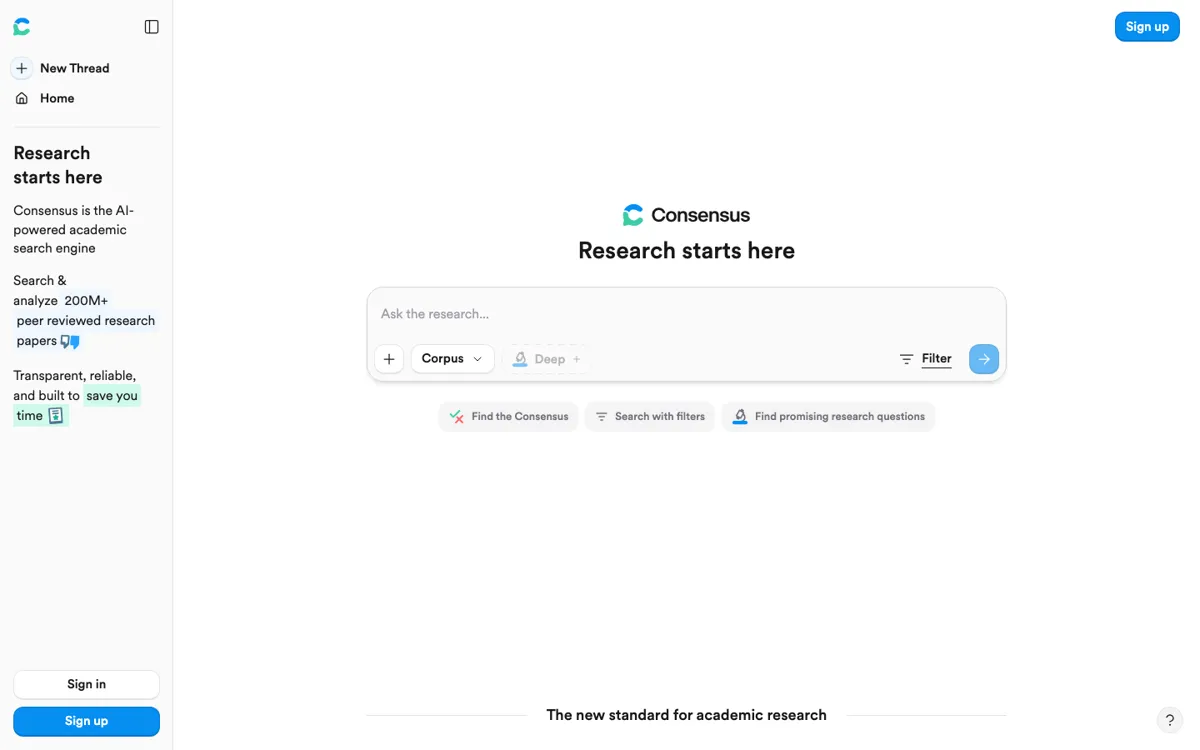
What does Consensus actually do?
Consensus is best used as a front-end to the research process, not the whole process. It earns its keep when you are still framing the question, testing whether a claim is well supported, or trying to see how scattered the literature is before you commit to a deeper review.
The better comparison is not "Can it summarize?" but "Does it get me to stronger evidence faster?" That is where Consensus has an edge over generic AI tools: it stays anchored to papers, exposes more of the research trail, and gives you tools like Ask Paper, Citation Graph, and Consensus Meter that make follow-up decisions easier.