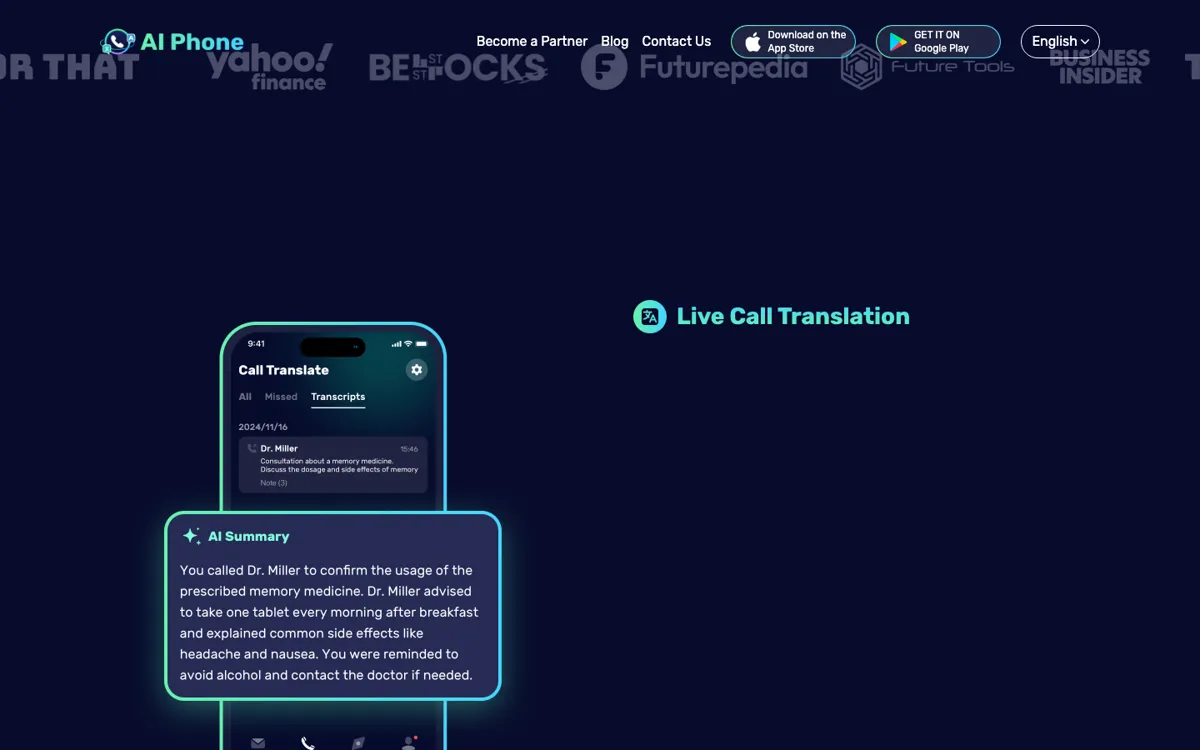
What does AI Phone actually do?
Most translation tools work best when you can slow the interaction down. You paste text, wait for the output, check whether the sentence survived the translation, then send it on. That breaks down in live calls, especially when the other person is talking fast, asking follow-up questions, or moving through a practical task like directions, support, scheduling, or negotiation. AI Phone exists for that narrower but more stressful moment. It is trying to keep the conversation moving by translating phone calls, messaging-app calls, and spoken exchanges while they are happening, instead of pushing users back into a text-first workflow.
What makes the product more compelling than a generic AI translator is the spread of communication surfaces it claims to cover. The homepage and FAQ point to standard phone calls, voice and video calls in apps such as WhatsApp and WeChat, bilingual subtitles on both screens, in-person conversation translation, and camera translation for captured text. That package suggests the app is trying to become a travel-and-communication utility rather than a single-feature call gimmick. It also helps explain why the product resonates with immigrants, travelers, and global small business users. The pain is not one sentence at a time. The pain is switching tools every time the conversation format changes.