HeyNews Review

7.7/10

Turn your newsletter archive and source feeds into drafts written in your own voice.

Review updated May 2026 By The AI Way Editorial Tested 174+ tools across the site 5 min read
HeyNews Long-form Editor SaaS Summarization Tone Rewrite Writing Assistant Paid from $99.00/mo

Our Verdict

HeyNews is interesting because it tackles the hardest part of AI newsletter writing, not just generating text, but making that text sound like an existing publication people already recognize. If the archive-learning claim holds up, it can cut a lot of repetitive drafting time for teams that already publish on a schedule. The main catch is price. At a $99 a month starting point from the PH launch data, it needs to replace a meaningful chunk of a real publishing workflow, not just help you occasionally brainstorm a subject line.

Try it
Paid product. Starts at $99.00 USD.
open_in_new Visit HeyNews
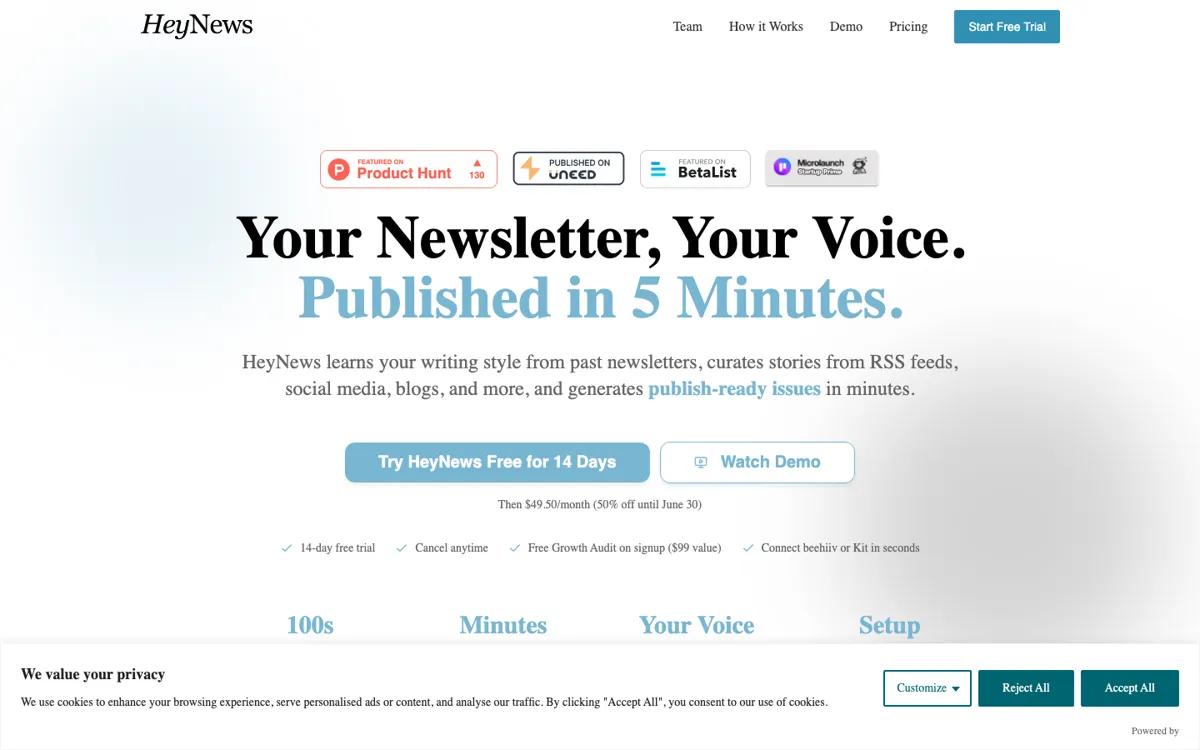
Official Website Snapshot Visit Site ↗

What people actually use it for

Draft recurring issues faster without flattening your newsletter voice

HeyNews fits teams or solo publishers who already have an archive, a recognizable tone, and a repeat publishing rhythm. Instead of collecting links, summarizing them, and shaping every section by hand, they can let the product watch sources, pull in relevant material, and draft in a style that is supposed to sound like the publication readers already know.

check_circle Pros

  • The archive-learning angle is stronger than a generic AI writer because it starts from your existing newsletter voice instead of a loose brand prompt.
  • Source monitoring plus draft generation fits a real newsletter workflow better than asking a chat tool to improvise every issue from scratch.
  • Native Beehiiv and Kit support makes the product more operationally useful for modern newsletter teams.
  • Archive imports from Substack or public newsletter archives reduce the setup friction for established operators with years of back issues.

cancel Cons

  • The entry price is high enough that smaller or inconsistent newsletters may struggle to justify it.
  • This only makes sense if your newsletter already has a clear voice worth preserving, which limits its value for brand-new publications.
  • The value depends heavily on how well it really learns tone from your archive, which is harder to verify from launch materials alone.

Should you use it?

Best for: Publishers, founder-led newsletter operators, and media teams who already send on a schedule and want source monitoring plus draft generation that sounds closer to their existing publication voice.

Skip it if: Skip it if you only send occasional email updates or are still figuring out your voice, because the archive-learning setup and $99 starting price only pay off when a repeat newsletter workflow already exists.

Is it worth the price?

Paid Starts at $99.00 USD

This is not priced like a casual AI writer. A $99 starting point means HeyNews is aiming at operators who already treat the newsletter like a serious growth or publishing asset. If the tool really cuts hours out of issue prep, the price is defendable. If you only publish sporadically, it will feel expensive fast.

Paid Upgrade
$99/month

Paid access is positioned around archive-based voice learning, source monitoring, and publish-ready newsletter drafting with platform integrations.

One thing to know before you start

HeyNews makes the most sense after you already have a stable archive of issues. The better and more consistent that archive is, the more likely the voice-learning layer has something real to model.

What does HeyNews actually do?

HeyNews stands out because it is trying to solve a more specific problem than “write with AI.” Its homepage and PH copy frame the product around newsletters with an existing voice, which is the right wedge. Newsletter operators do not just need paragraphs on demand, they need issues that sound like the publication people subscribed to in the first place. That is a much narrower and more valuable promise than the usual AI writer claim. If the tool can actually learn tone from your archive and turn watched sources into workable drafts, it can remove one of the most repetitive parts of publishing without forcing every issue through the same bland AI cadence.

The integration story also helps. Native Beehiiv and Kit support plus archive imports from Substack or public archives means the product is meeting newsletter operators where they already work instead of asking them to rebuild everything in a new ecosystem. That matters because the painful part of newsletter production is often not writing alone, but moving from source review to draft to send in a way that still feels like your publication. A tool that understands your archive and connects to real delivery platforms is much closer to replacing labor than a generic assistant that only offers prompts and drafts in a vacuum.

The main limitation is that the product has to clear a real economic bar. At plans starting from $99 per month, HeyNews cannot survive as a novelty writer. It has to save enough drafting time, research time, or editing effort to matter. That makes it a stronger fit for publications with a clear workflow and a stable send schedule than for casual creators or early-stage newsletters still finding their tone. The concept is strong, but the long-term value depends on whether the output really feels like your newsletter rather than simply an AI approximation of it.

What you can do with it

Learns your writing voice from past newsletter issues instead of starting from a blank AI persona
Monitors your chosen sources and turns them into draft newsletter copy
Supports native publishing workflows for Beehiiv and Kit
Imports archives from Substack or any public newsletter archive to train the house style faster
Focuses on publish-ready newsletter drafting instead of general-purpose marketing copy generation

Technical details

platform
Hosted newsletter drafting product that learns from your past issues and turns monitored sources into draft issues in the voice of an existing publication.
deployment
Hosted SaaS with native Beehiiv and Kit support, plus archive import from Substack or other public newsletter archives based on PH product data.
api_available
No public API is evidenced in the captured materials. The workflow described publicly is native platform support plus archive import, not developer-first API usage.

Top Alternatives to HeyNews

If HeyNews is close but still misses the job, try one of these instead.

Key Questions

Does HeyNews have a free plan?
Not from the evidence captured here. PH launch data mentions a 14-day trial and plans starting at $99 per month, which points to a paid product rather than an ongoing free tier.